
Last updated November 15, 2026
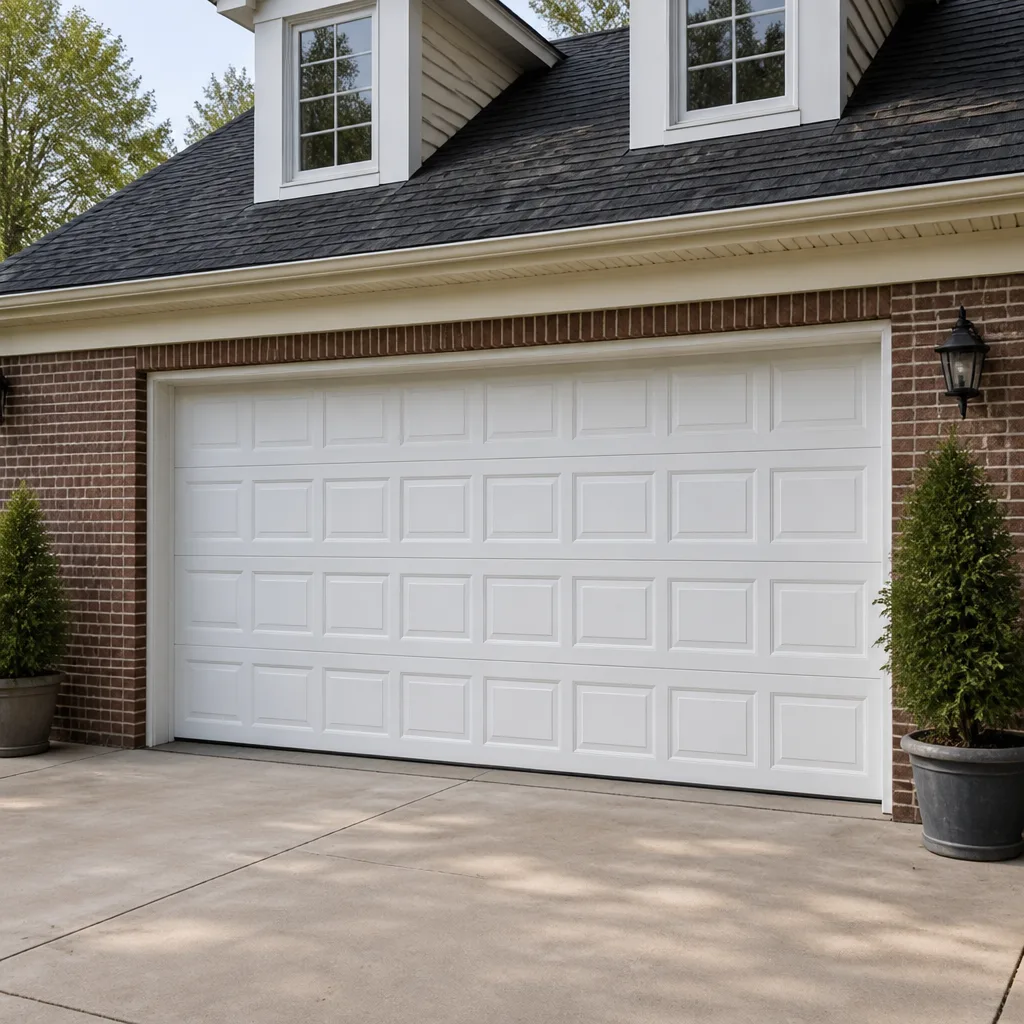 Raised-panel steel
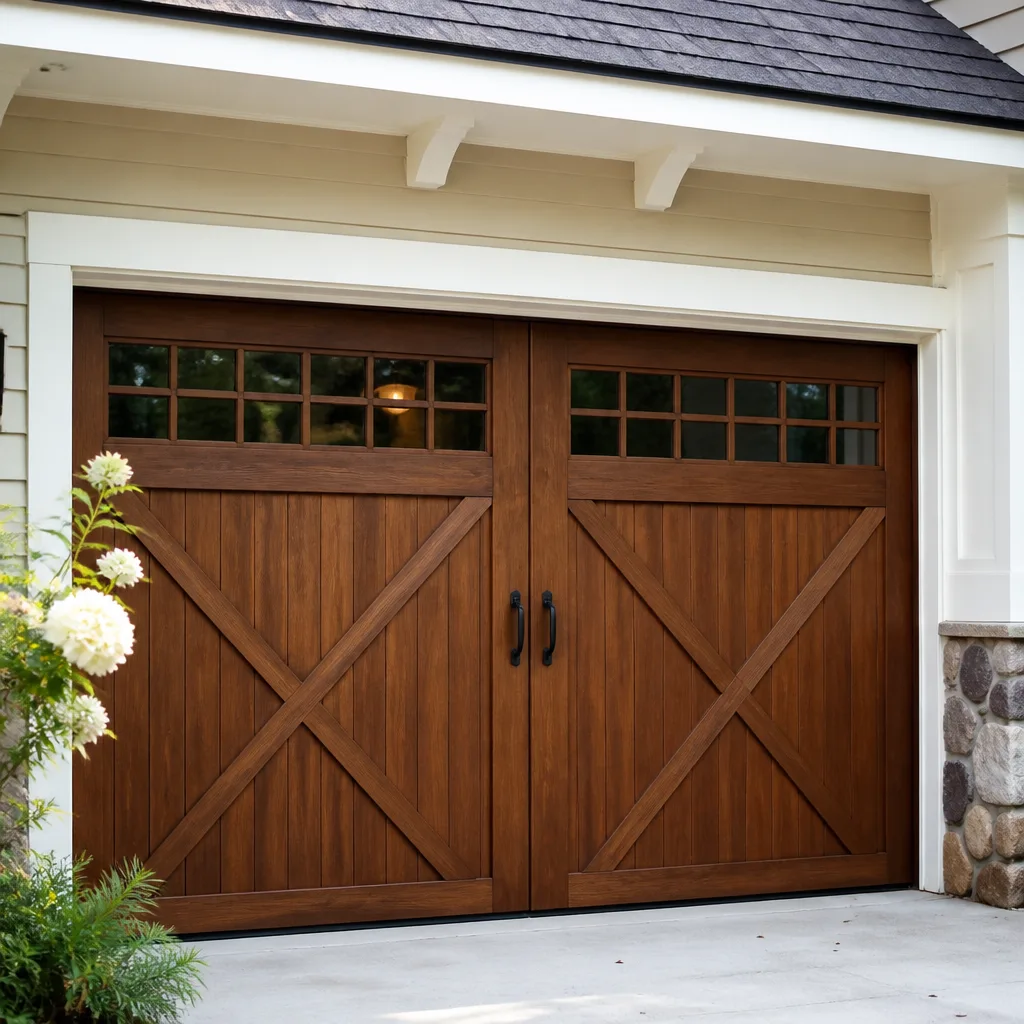 Carriage house
 Modern flush
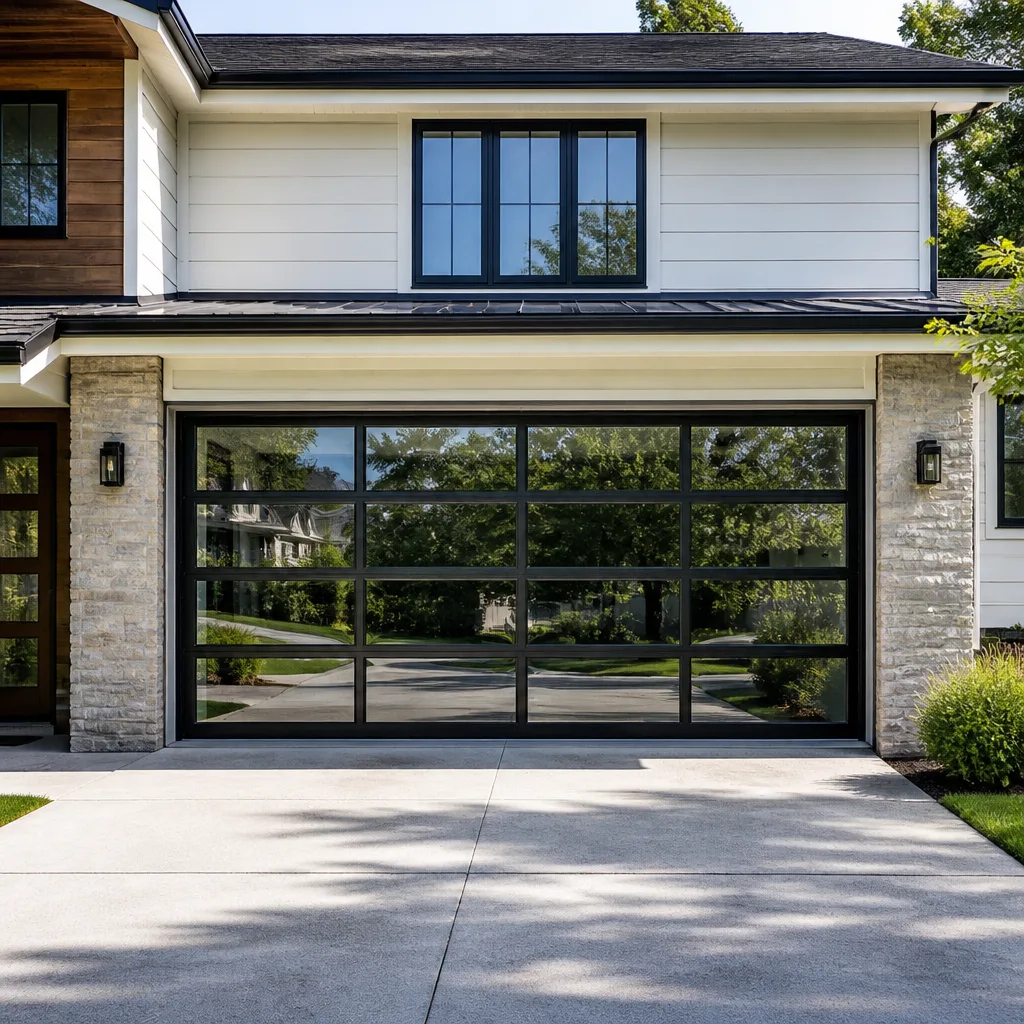 Full-view glass
 LiftMaster openers
 Chamberlain openers
Full 25-point door and opener safety check with every visit - springs, cables, rollers, tracks, and your LiftMaster or Chamberlain opener included
You get a price before we start. It does not change when the pro arrives.
Get your free estimateGarage Door Repair Maintenance Schedule: What to Do and When
Lubricating your garage door springs in August is nearly pointless. Doing it in late October, before the first hard freeze settles over Hamilton County, is what actually keeps them from snapping in January. Most maintenance advice treats every month the same, and that’s the problem we see most often in Carmel. Garage door care isn’t about checking boxes on a calendar; it’s about timing. This guide lays out a season-anchored schedule built around central Indiana’s actual weather, from the pre-winter prep in October through the post-winter inspection in March, plus the correct lubrication map and a balance test that reveals spring wear months before failure.
Quick Answer
A garage door needs four seasonal touchpoints, not monthly attention: pre-winter prep in October (lubrication, balance check, weather seal inspection), a post-winter inspection in March, a summer heat check in July for opener and thermal issues, and an annual balance test every spring. Doing tasks out of sequence wastes effort and can cause the very damage you’re trying to prevent.
Styles & brands we work with
- Raised-panel steel
- Carriage house
- Modern flush
- Full-view glass
- LiftMaster openers
- Chamberlain openers
Table of Contents
- Why Timing Matters More Than Frequency
- October: Pre-Winter Prep Before the First Freeze
- December Through February: Winter Watch
- March: Post-Winter Inspection
- July: Summer Heat Check and Opener Thermal Cutoff
- The Correct Lubrication Map
- The Balance Test and What Off-Balance Feels Like
- Lifespan Benchmarks by Component
- Building Your One-Page Annual Log
Why Timing Matters More Than Frequency
A garage door is a system under constant tension, and every part of it reacts to temperature. The steel springs that lift a 150- to 200-pound door are rated for a specific cycle count, but cold changes the equation. Metal contracts, lubricant thickens, and a spring that’s already lost some of its tension has less margin for error. When the temperature drops to 20 degrees overnight in Carmel, the sound that wakes you up at 4am is usually a spring that finally gave out.
That’s why an October lubrication isn’t just housekeeping. It’s insurance against a January failure. The same logic runs in reverse during summer. When the mercury pushes into the 90s, the opener’s motor works harder to lift the same door, and many openers have a thermal cutoff that stops the motor until it cools. Homeowners in Carmel sometimes call us thinking the opener is dead when it’s simply overheated.
The schedule below is built around this seasonal physics. There are four meaningful moments in the year, and each one does something the others can’t. Skip them or shuffle them out of order and you’re doing work that doesn’t address the actual risk.
October: Pre-Winter Prep Before the First Freeze
October is the most important month on this calendar. It’s the last window before consistent cold, and everything you do now protects the door through the winter. This is the maintenance window we recommend for every homeowner in the Carmel area, whether the door is five years old or approaching twenty.
A properly done October prep covers four areas:
- Lubricate hinges, rollers, and springs. Use a silicone-based spray on hinges and rollers, and white lithium grease on the torsion spring. The cold will make any dried-out lubricant useless. New lubricant applied now keeps metal surfaces sliding instead of grinding through the freeze.
- Run the balance test. A door that’s off-balance in October will be worse by January. Do this before the cold locks in so you have time to schedule repairs without urgency.
- Inspect the bottom weather seal. A cracked or hardened bottom seal lets in cold air, moisture, and small pests. Replace it before winter if it’s brittle.
- Test the safety reverse. Place a 2×4 flat on the ground under the door and run it closed. The door should reverse on contact. If it doesn’t, the opener’s force settings need adjustment, and this is a task for a trained technician.
If you do nothing else this year, do the October prep. It’s the single highest-value maintenance task for a Carmel garage door.
December Through February: Winter Watch
Winter isn’t a maintenance month so much as a monitoring month. There’s little proactive work to do when it’s 15 degrees outside, but there’s plenty to watch. The goal in winter is to catch a developing problem before it leaves you with a door stuck open or a car trapped inside.
Listen for changes. A door that grinds, squeals, or hesitates on the way up is telling you something. A door that reverses for no reason, or stops partway, is doing the same. If the opener’s light flickers or the remote stops working, the culprit is usually the safety sensor alignment, which can shift when the door’s track flexes in cold weather.
Pay attention to the door’s behavior in the morning. If it lifts more slowly than it did in October, or if it seems heavier, the springs are losing tension. Don’t force it. Repeatedly running a door on tired springs wears out the opener faster and can lead to a spring failure while the door is up.
We handle winter repairs across Carmel throughout the season, and the calls we get most often in January and February are spring failures and opener strain. Both are predictable, and both are largely preventable with a solid October prep. Our technicians have up to 8 years of experience diagnosing exactly these seasonal failure patterns, and we work on the brands that are installed on most Carmel doors, including Genie and Clopay systems.
March: Post-Winter Inspection
March is the recovery month. Winter is the hardest season on a garage door, and this is the first real opportunity to assess what it cost you. When the ground thaws, walk through these checks:
- Look at the springs. A spring that’s stretched compared to a photo you took in October is on its way out. Spring wear is cumulative and doesn’t reverse.
- Check the track for alignment. Frost heave, minor settling, and the door’s own weight can shift tracks out of plumb. Run the door by hand and watch for any drag or uneven movement.
- Test the rollers. Rollers that wobble or make noise when you spin them by hand are worn. Worn rollers put extra strain on the hinges.
- Examine the cables. Cables fray from the inside out, so look for any sign of wear, kinks, or rust. If anything looks wrong, stop and call.
- Re-check the weather seal and bottom threshold. A winter of freeze-thaw cycles can crack seals that looked fine in October.
If the post-winter inspection turns up track or cable issues, get them addressed before summer. A door dragging on a misaligned track runs hotter and wears the opener faster, which is exactly what you don’t want heading into July.
July: Summer Heat Check and Opener Thermal Cutoff
July in central Indiana is the test month for openers. When the attic above the garage bakes in the heat and the outdoor temperature sits in the 90s, the opener’s motor is working in the worst conditions of its year. Many modern openers, including many LiftMaster and Chamberlain units, have a thermal cutoff that protects the motor by shutting it down if it overheats. Homeowners who’ve never experienced this sometimes call us thinking the opener has failed when it’s actually doing its job.
Here’s what to know in July:
- If the opener stops responding after opening or closing, let it cool and try again in 15 minutes. If it works after a rest, it’s a thermal cutoff, not a failure.
- Check that nothing is blocking airflow around the opener housing. Boxes stacked on top of the opener and insulation stuffed around it can make overheating worse.
- Test the safety reverse again. Heat can affect the opener’s force sensing. A door that needs to close firmly to seal against a hot weather seal might trip the reverse sensor.
- Lubricate only if it’s been recommended. Don’t re-lubricate in July as a routine matter. Once in October is enough for most doors.
If your opener is cutting off multiple times a week in the summer, that’s a sign it’s working harder than it should. It might be failing, or the door itself might be dragging. Either way, that’s a good reason to have it looked at. To read more about what we see in these cases, see our garage door opener repair page.
The Correct Lubrication Map
Lubrication advice is everywhere, and a lot of it is wrong. The mistake most homeowners, and some guides, make is treating the whole door the same. Different parts need different lubricants, and one part in particular should never be lubricated at all. Here’s the map we use:
- Silicone spray: Hinges and rollers. Silicone is light, doesn’t attract dust, and won’t degrade the rubber seals nearby.
- White lithium grease: Torsion springs and the torsion bar. White lithium stays put under pressure and holds up through cold weather better than lighter lubricants.
- Nothing at all: The tracks. This is the piece most people get wrong. Track surfaces should be clean and dry. Lubricant on a track attracts dust and dirt, which creates a sticky film that makes the door drag more, not less. Wipe the tracks clean with a dry cloth, and leave them alone.
As for quantity: a single application in October is enough for most doors. Over-lubricating can be as bad as under-lubricating. Sprays that drip down onto the door panel are hard to clean, and excess grease on the torsion bar can attract debris. Lubricate lightly, wipe off any excess, and call it done.
The Balance Test and What Off-Balance Feels Like
The balance test is the most underused maintenance tool available to a homeowner. It reveals spring wear months before a failure, and it takes about a minute. Here’s how to do it, safely:
- Close the door completely. Make sure no one is in the path.
- Pull the manual release cord to disconnect the door from the opener. It hangs from the trolley near the opener.
- Lift the door by hand to about waist height (roughly midway) and let go.
- Watch what it does. A balanced door stays roughly in place. If it sags significantly, the springs have lost tension. If it rises on its own, the springs are over-tensioned.
- Reconnect the door by pulling the release cord back toward the opener until it clicks into the trolley.
What “off-balance” feels like matters more than what it looks like. In practice, an off-balance door feels heavy on the way up from the bottom, then suddenly light near the middle. If the door sags at the midpoint and takes real effort to lift further, the springs are tired. That’s a signal, not a diagnosis. Any spring adjustment is a job for a trained technician because the springs are under high tension and can cause serious injury.
Do the balance test in October and again in March. If the door passes in October but fails in March, you caught the problem early. Our team handles the adjustment or replacement. For a closer look at what we do, our garage door repair page covers the typical repairs we handle.
Lifespan Benchmarks by Component
Maintenance extends a part’s life, but it doesn’t make it infinite. Knowing which components are near the end helps you decide whether you’re maintaining or counting down. Rough benchmarks for standard residential doors:
- Torsion springs: 7 to 12 years for standard-cycle springs, longer with heavy-duty springs. Lubrication can add time but won’t reverse fatigue.
- Cables: 10 to 15 years. Cables usually get replaced when the springs do, since both are under tension together.
- Hinges and rollers: 5 to 10 years. Rollers are the more frequent wear item; replacing them is a standard tune-up task.
- Bottom weather seal: 3 to 5 years in a climate like central Indiana’s, where freeze-thaw cycles crack rubber faster than in milder areas.
- Opener motor (chain or belt): 10 to 15 years. Belt-drive openers usually last longer than chain-drive. Genie and LiftMaster units are the most common we see in Carmel.
- Safety sensors and logic boards: 8 to 12 years. Logic boards are the part that fails most unexpectedly, and replacement isn’t always cost-effective on older units.
When a component is past the far end of its range, maintenance can still help, but at some point you’re paying to keep a part alive rather than to extend its life. A technician can tell you which side of that line you’re on. If you’re looking at a full replacement, our Carmel page covers what’s available locally.
Building Your One-Page Annual Log
A running record beats a one-time inspection every time. Keep a single page in the garage, clipped to a shelf or taped to the wall, where you note what was done, what was found, and what to watch. Here’s the format that works best:
- Date and month: Note when each task was done. Helps you spot patterns later.
- What was done: “October prep – lubricated hinges/rollers/silicone, torsion spring/lithium, tested reverse, balance test passed.”
- What was noted: “Slight sag at midpoint but stayed.” “Roller #3 noisy.” “Bottom seal starting to crack.”
- What to watch: “Re-check balance in March.” “Replace seal if cracks widen.”
- Repairs done and by whom: Note if a technician adjusted or replaced anything, so a future call knows the history.
This log is useful to you, and it’s useful to any technician who comes out for a repair. When we can see what was done in October and what was flagged in March, we make better decisions on the visit. We work on the brands that dominate Carmel homes, from Clopay doors to Wayne Dalton and Amarr systems, and having a record of what’s been done helps us skip the guesswork.
Common Mistakes to Avoid
- Lubricating the tracks. This is the single most common mistake. Tracks should be clean and dry, not greasy.
- Lubricating in summer instead of fall. Lubricant applied in July has weathered away by the time winter hits. Do it in October.
- Skipping the balance test. It’s the fastest way to catch spring wear, and most homeowners never do it.
- Forcing a heavy door. If the door feels heavy, stop running it. Every cycle on tired springs wears the opener and risks a failure.
- Adjusting the opener’s force settings to make a heavy door lift. This leaves the door running beyond its safe operation.
- DIY spring work. Torsion springs are under extreme tension and can cause serious injury. Leave them to a trained technician.
- Ignoring a slow opener in July. A thermal cutoff that happens once a week isn’t normal. Repeated tripping is usually a sign of strain or a failing motor.
See the difference
 Before
 After
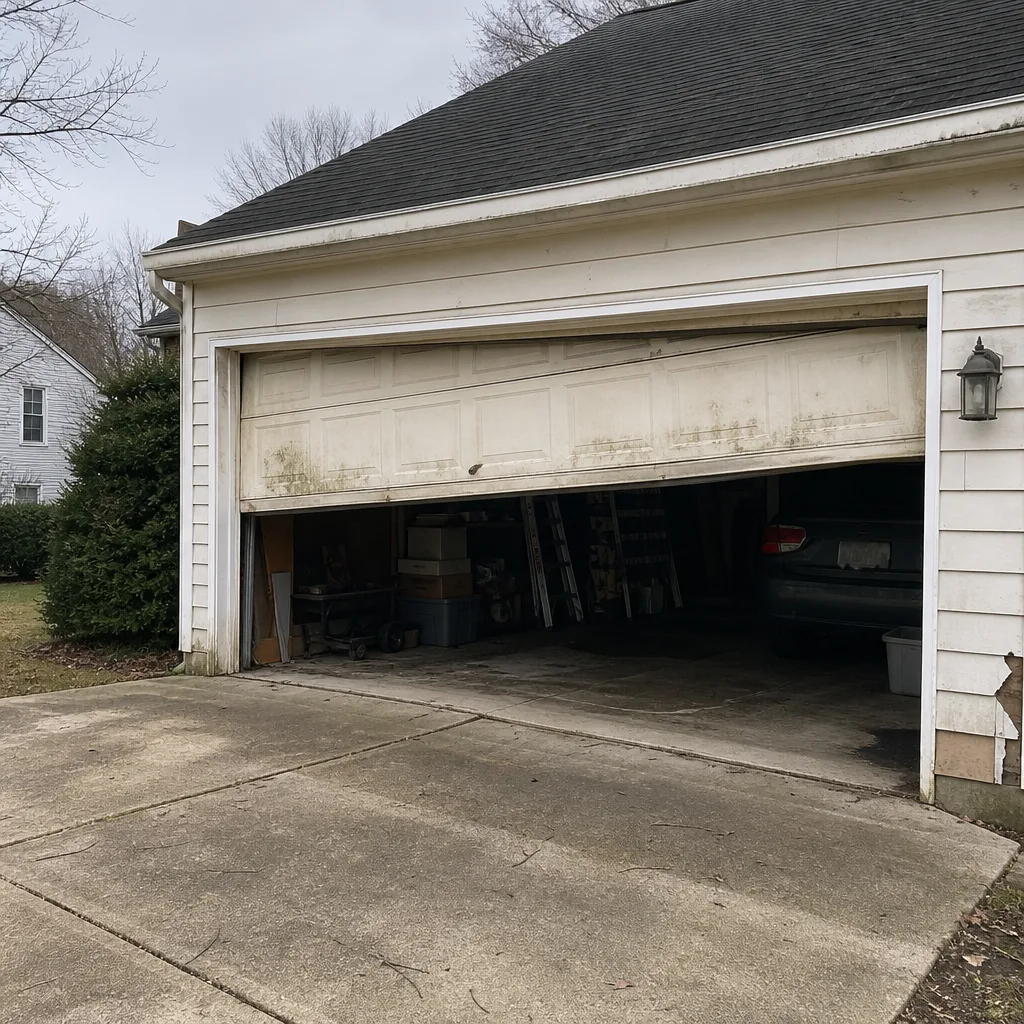 Before
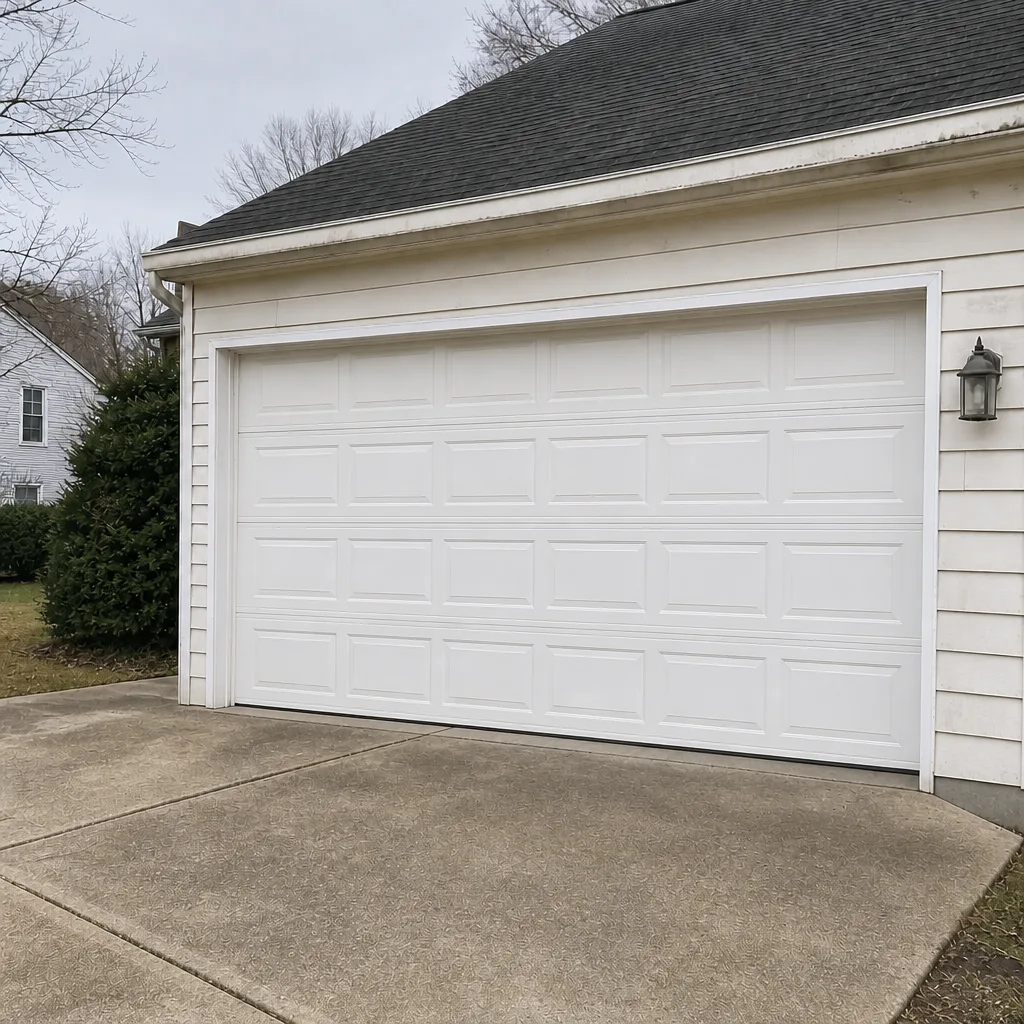 After
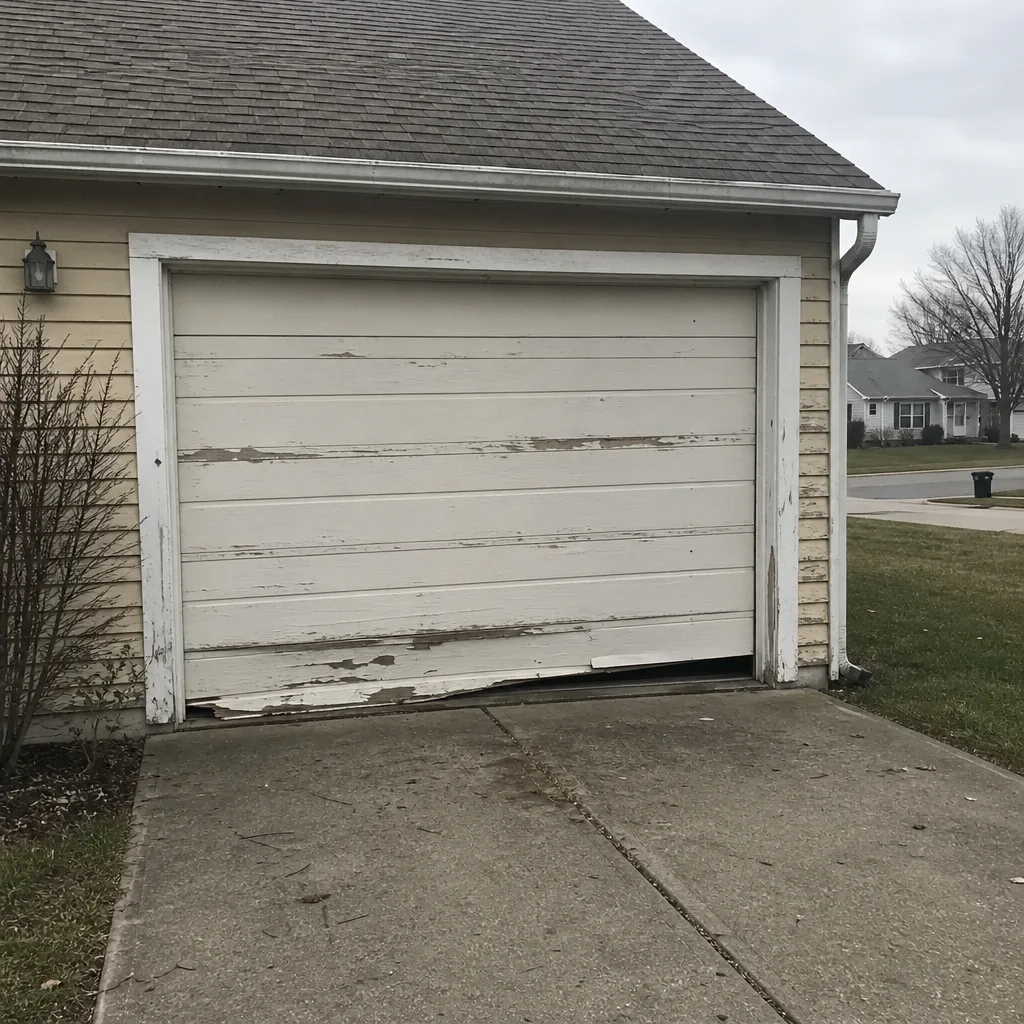 Before
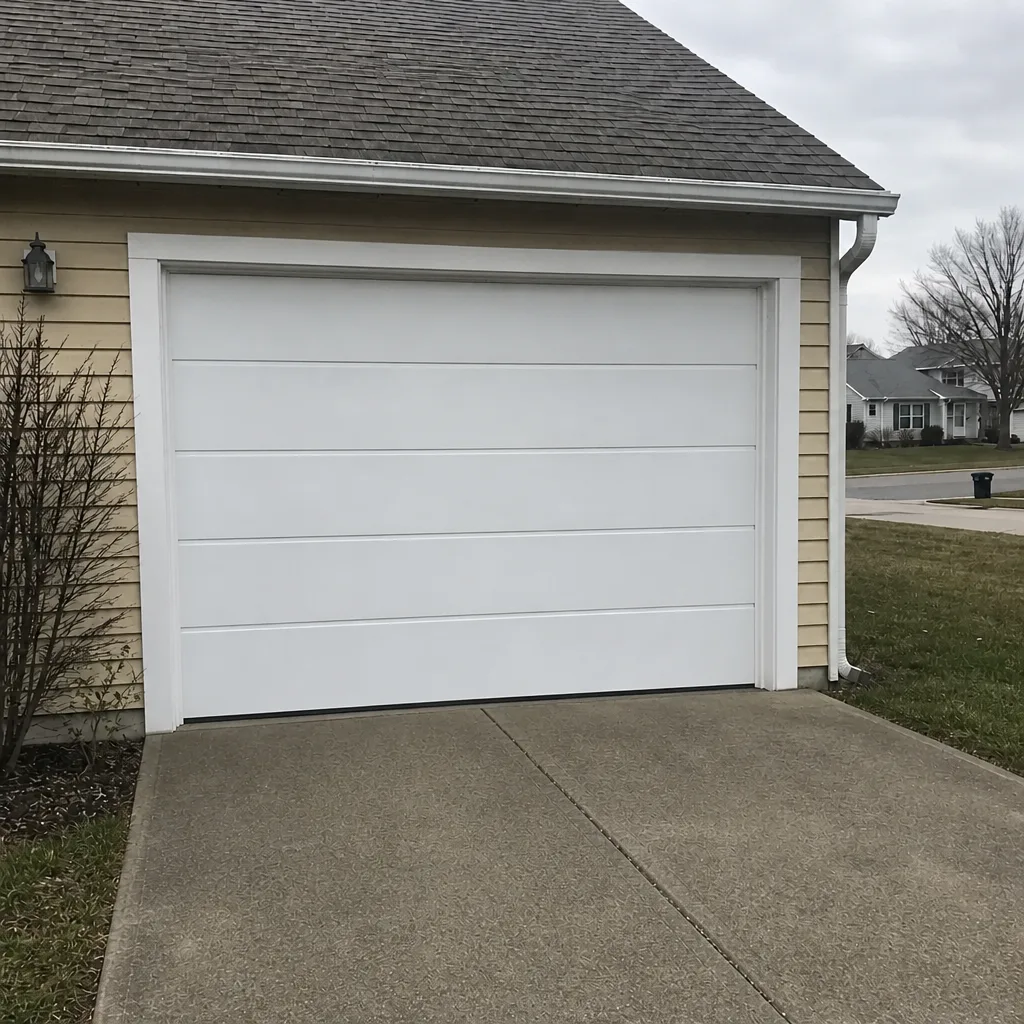 After
When to Call a Professional
Some tasks belong on the homeowner’s list and some don’t. Call a professional if the balance test fails, if you see fraying or kinks on a cable, if the door reverses without an obvious obstruction, if the track has moved visibly out of alignment, or if the opener trips its thermal cutoff repeatedly. Also call if you hear grinding, squealing, or popping sounds you can’t place. Springs, cables, and torsion adjustments are high-tension work and require proper training. Carmel Garage Door Service offers free estimates in Carmel. Call (855) 535-1056 to schedule a visit. We answer 24/7, with fast dispatch from 7am to 7pm, Sunday through Friday.
Frequently Asked Questions
Once a year is enough for most garage doors, and the best time is October, before the first deep freeze in central Indiana. Use silicone spray on hinges and rollers, white lithium grease on the torsion spring, and never apply lubricant to the tracks. For a closer look at parts that need attention, see our Carmel Garage Door Service overview of the work we handle.
Run the balance test: disconnect the door from the opener and lift it to waist height. If it sags significantly at the midpoint or feels heavy on the way up, the springs are losing tension. Visible gaps or stretches in the spring coils are another sign. Call (855) 535-1056 for a free estimate before the spring fails completely.
Opener thermal cutoff is the most likely reason. Many openers, including many LiftMaster and Chamberlain units, have a safety feature that shuts off the motor when it overheats. If the opener works again after 15 minutes of rest, it’s the cutoff. Repeated tripping means the motor is under strain and should be checked. Call (855) 535-1056 to schedule a diagnostic visit.
You can handle lubrication, visual inspection, the reverse test, and the balance test yourself. Anything involving tension on springs or cables needs a technician. If you’re not sure a task is safe, it isn’t. Our technicians have up to 8 years of experience with high-tension adjustments and can check what you’ve found.
Yes. Cold thickens lubricant, contracts metal, and reduces spring tolerance. A spring that’s holding on in September often fails in January. The best defense is an October lubrication and balance test done before the freeze, followed by a March post-winter inspection. If you’re dealing with a spring issue now, call (855) 535-1056 for a free estimate.
Torsion springs typically last 7 to 12 years, hinges and rollers 5 to 10 years, and opener motors 10 to 15 years. Cables usually get replaced with the springs because they’re under tension together. Timing depends on cycle count and climate. In central Indiana, freeze-thaw cycles shorten the life of weather seals and cables compared to milder climates. If a part is past its expected life and starting to fail, replacement is usually the better move. Call (855) 535-1056 for a free estimate.
The Bottom Line
Garage door maintenance in Carmel isn’t a monthly chore. It’s four well-timed checkpoints: October prep before the freeze, a winter watch, a March inspection, and a July heat check. Lubricate correctly (silicone on hinges and rollers, white lithium on springs, nothing on tracks), run the balance test twice a year, and keep a simple one-page log in the garage so you and any technician can see the history. That schedule catches most failures before they happen and tells you when a part is past the point of maintenance.
If your door is due for a check, call Carmel Garage Door Service at (855) 535-1056 for a free estimate. We answer 24/7, with fast dispatch from 7am to 7pm, Sunday through Friday.
Written by the team at Carmel Garage Door Service.