
Last updated November 15, 2026
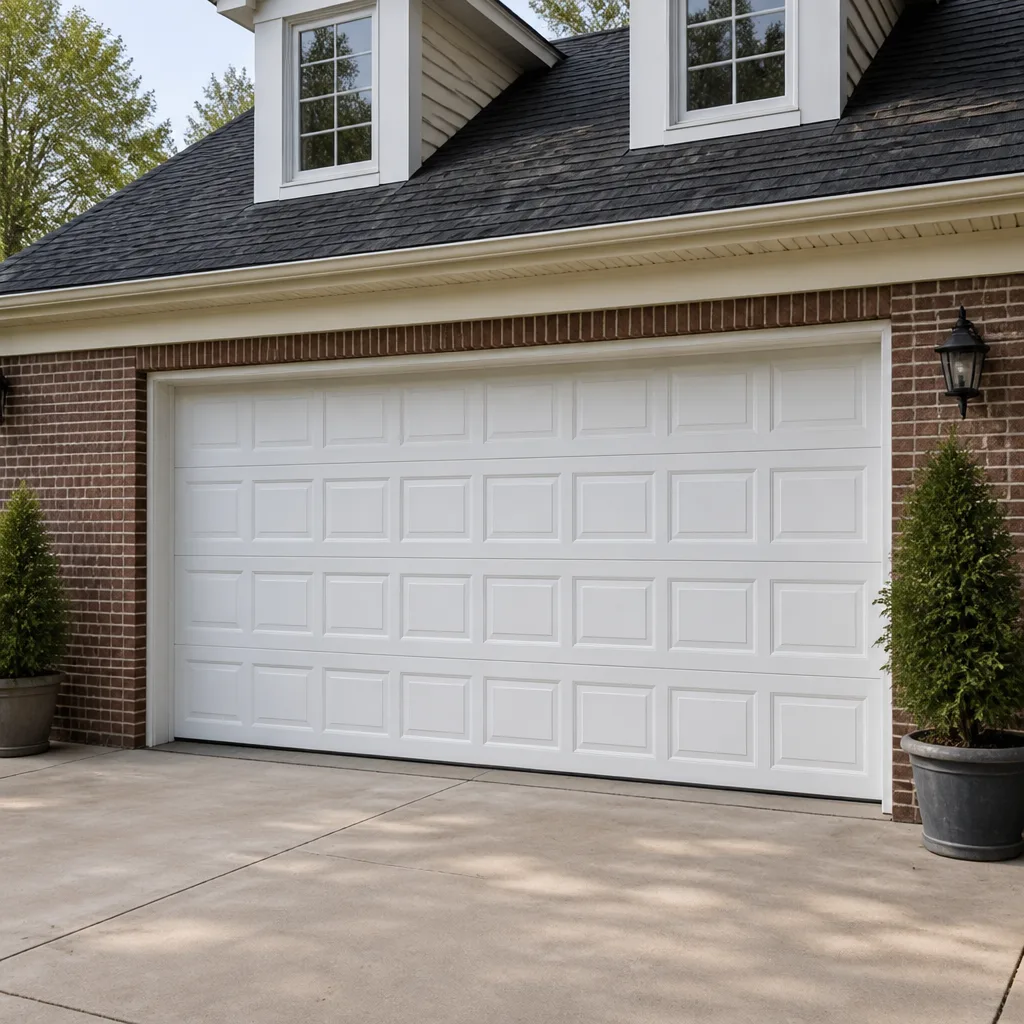 Raised-panel steel
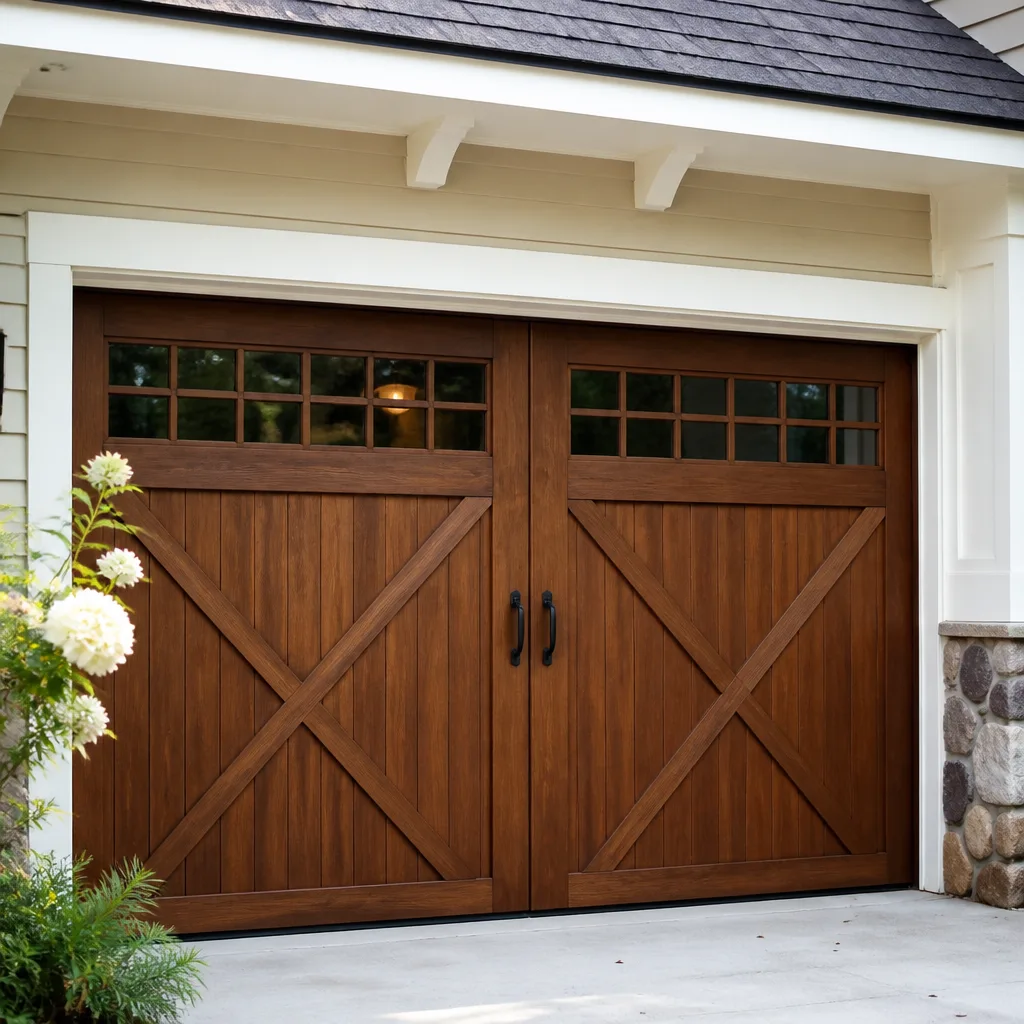 Carriage house
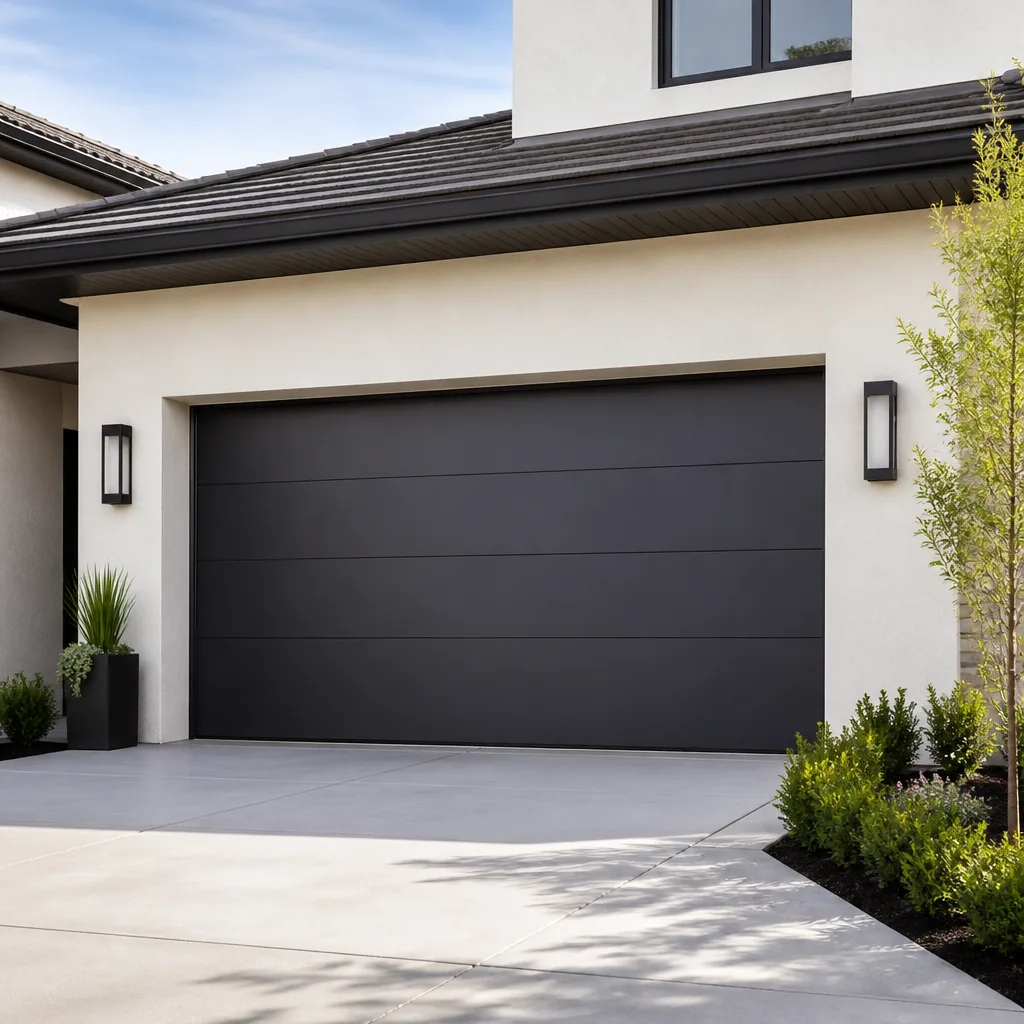 Modern flush
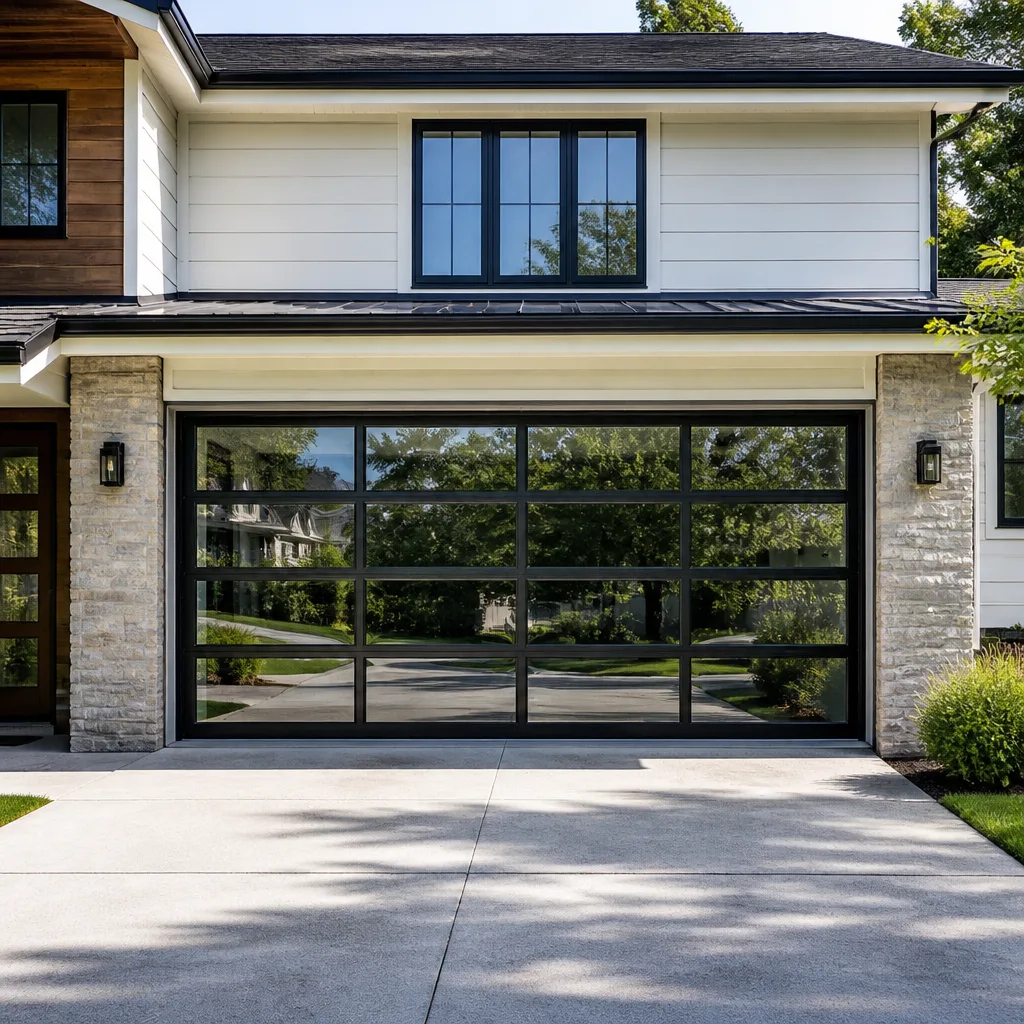 Full-view glass
 LiftMaster openers
 Chamberlain openers
Full 25-point door and opener safety check with every visit - springs, cables, rollers, tracks, and your LiftMaster or Chamberlain opener included
You get a price before we start. It does not change when the pro arrives.
Get your free estimateGarage Door Emergency Preparedness Guide for Carmel Homes
Most homeowners in Carmel know where their electrical panel is. They know where the water shutoff hides. Ask them how to release a garage door opener by hand and the answer is usually a shrug. That’s the gap this guide closes. Garage door emergencies in Carmel tend to cluster around two situations: severe weather that jams or damages a door when getting the car out suddenly matters, and mechanical failures that leave a vehicle trapped or a house standing open. Both are manageable when you understand the system before the phone rings. This guide covers the manual release procedure for the brands most common here, how to secure a door that won’t close, what to do when a car is trapped, and how to build a one-page reference so the next emergency isn’t your first encounter with your own door.
Quick Answer
Every homeowner in Carmel should know how to release their garage door manually, where the emergency release cord hangs, and how to secure a door that won’t close after a storm or power loss. The safest move in most emergencies is to disconnect the opener and lift the door by hand, then call a specialist rather than force a spring, cable, or opener back into service. If you’re unsure or the door is stuck, call (855) 535-1056. We answer 24/7, and fast dispatch runs from 7am to 7pm, Sunday through Friday.
Styles & brands we work with
- Raised-panel steel
- Carriage house
- Modern flush
- Full-view glass
- LiftMaster openers
- Chamberlain openers
Table of Contents
- Why Local Doors Fail When the Weather Turns
- How Do You Release a Garage Door By Hand?
- What If the Release Cord Is Stuck or Disconnected?
- How Do You Secure a Garage Door That Won’t Close?
- What Do You Do When Your Car Is Trapped Inside?
- Storm Preparedness: What Your Door Can and Can’t Handle
- Building a One-Page Garage Door Emergency Reference
- Frequently Asked Questions
Why Local Doors Fail When the Weather Turns
Hamilton County sees its share of straight-line wind events, spring hail threats, and the occasional tornado watch. What we’ve seen in the aftermath is consistent: doors don’t usually fail because the storm destroyed them. They fail because the storm exposed a weakness that had been sitting there for months. A track that was a quarter inch out of alignment, a spring that had lost tension, a grease-starved roller, a limit setting on an opener that was barely holding on. The wind gust just finished the job.
That pattern matters because it means preparedness isn’t really about buying anything. It’s about testing what you already own. The most common call we get after a serious wind event isn’t about a smashed panel. It’s about a door that came off the track or stopped responding entirely, and the homeowner discovering for the first time that they can’t manually release the opener.
Carmel homes also tend to be newer builds with insulated steel doors and belt-drive openers, which is good news for noise and efficiency but can hide problems. A belt-drive LiftMaster or Craftsman unit running a heavier insulated Amarr or Wayne Dalton door will strain more over time than a lighter setup, and the motor can still fall short of lifting the door by hand if the spring tension is off. The door feels fine right up until it doesn’t.
Two phone calls matter in a garage door emergency, and only one of them is ours. The first is to your insurance agent if the storm caused structural damage. The second is to a specialist who can look at the door and diagnose what actually failed. What you do between those calls is what this guide is about.
How Do You Release a Garage Door By Hand?
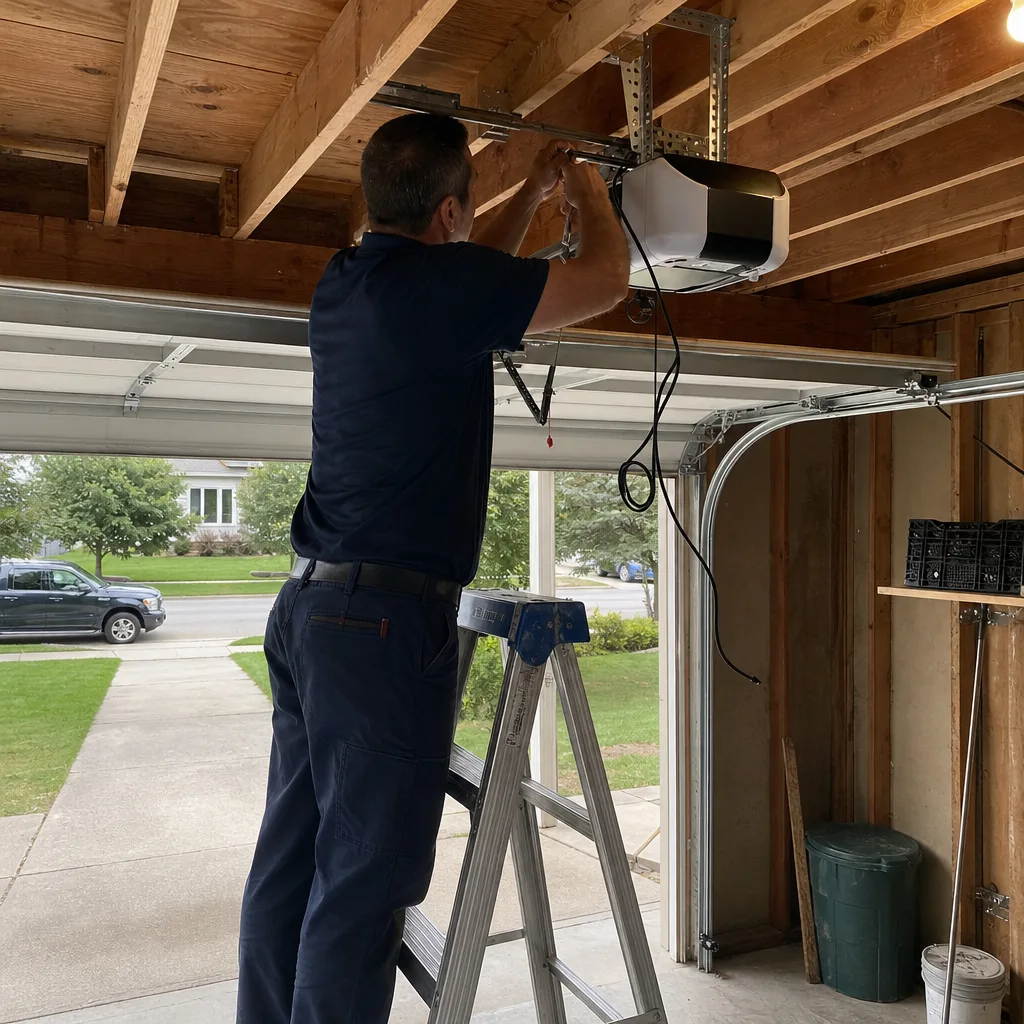
You release a garage door by pulling the red emergency cord or handle that hangs from the opener carriage, then lifting the door by the bottom section. On most residential openers the release disengages the door from the motor, and the door becomes a manual door that you raise and lower yourself. It works the same way on the brands we see most in Carmel, including LiftMaster, Chamberlain, Genie, Craftsman, and Raynor.
Here’s the sequence, in the order it actually goes:
- Stand clear of the door’s path. The door becomes dead weight the moment the release engages. If the springs are compromised, it can drop fast.
- If the door is open, lower it by hand first. Pull the cord before you let the door come down. Most doors are difficult to control once released and gravity takes over.
- Pull the release cord firmly, straight down and slightly toward the door. On a Genie screw-drive or a belt-drive LiftMaster, the carriage is at the top center of the door. On a Craftsman chain-drive it’s usually the same position.
- Listen for the click. You should hear the trolley disengage from the carriage. Confirm the door is now free to move up and down by hand.
- Lift the door slowly using the bottom panel, not the top. If it won’t budge, stop. That’s a spring problem, not an opener problem, and it’s not something to push through.
- To re-engage, close the door, then push the release lever back up until it clicks, and press the wall button once. The opener runs a short travel check and re-locks the carriage.
If your door won’t lift by hand at all, the spring is not doing its job. Springs are the dangerous part of every garage door system and a wound torsion spring stores enough energy to cause serious injury. This is where you stop and call a professional rather than force anything. Our garage door repair team handles spring replacement on every major brand and can usually diagnose what failed on the first visit. If the door lifts but the opener no longer responds, that’s the opener itself, and our garage door opener repair service covers LiftMaster, Chamberlain, Genie, Craftsman, and Raynor logic boards, limits, and remotes.
Testing this cord once a season takes thirty seconds and is the single best thing you can do before storm season arrives. Pull it, confirm the door releases, push it back, confirm the opener runs. Most homeowners in Carmel have never done it.
What If the Release Cord Is Stuck or Disconnected?
If the release cord won’t pull or you pull it and the door stays locked to the opener, the most likely cause is a disconnected release cable or a jammed carriage. A previous DIY repair is a common culprit: someone reattaches the release arm with the wrong pin, or the cable slips out of its eyelet and quietly hangs loose for years until the day you need it. You won’t know until you try.
What to check before you call:
- Follow the cord up to the carriage. Confirm the cable actually connects the release handle to the trolley. If you see a cable end dangling free, that’s your problem.
- Look for a jammed trolley. If the opener ran the door past its travel limit, the carriage can bind against the rail. You may need to manually roll the trolley back by hand once the door is free.
- Try a firm but not violent pull at the correct angle. Straight down and slightly toward the door. Yanking sideways can break the cable end or bend the arm.
- Don’t try to cut or force the release mechanism. A bent release arm can jam the trolley permanently and turn a simple fix into a full carriage replacement.
If the door is closed and the cord is disconnected, the safest way in is usually the manual release on the opener body itself, but that requires some familiarity with the specific unit. On a LiftMaster or Chamberlain, the release is typically at the motor housing. On a Genie or Craftsman, it can be in a different spot. Our technicians have up to 8 years of experience and know these units by sight, which means a call about a stuck release often turns into a same-day fix rather than a guess.
Once the door is released, reconnect the release mechanism carefully. Push the arm back until it clicks and run the opener once to confirm it re-engaged. If you hear grinding or the opener runs without moving the door, the carriage didn’t catch, and it’s worth having it checked before the next emergency.
How Do You Secure a Garage Door That Won’t Close?
A garage door that won’t close after a storm or power outage leaves your home open. The right move is to leave the door where it is, get the car out if you need to, and secure the opening with something other than the door itself. Don’t try to force a door that has come off its track, and don’t prop it with something that could fall.
What actually helps:
- Release the opener and check for obstruction. Photosensors at the bottom of the track are the most common cause of a door that refuses to close. A leaf, a spider web, or a knocked sensor can trip the safety circuit. Wipe the lenses and confirm the green or amber lights are on.
- Look at the tracks. If either track is bent or the door is off the roller, stop. Forcing the door back into a bent track can twist the panel and damage the opener carriage at the same time.
- Block the opening with a heavy bar or board across the inside of the door frame if the door is up and staying up. This is temporary and should be treated as a stopgap, not a solution.
- Don’t disconnect the opener and leave the door partially up. A door left in a half-open position with a compromised spring can fall without warning, and the weight of a full door landing on anything in the path is dangerous.
- Don’t tie the door down to the track with rope or bungee. It looks secure and isn’t. It also makes the door harder for a technician to safely release and repair.
What makes it worse: wedging the door down with a chair, stacking boxes against it, or running the opener repeatedly hoping it catches. Any of those can damage the opener’s limit switch or the door’s bottom seal, and they don’t actually secure the opening. If the door is coming off its track or the springs are compromised, this is a call-out rather than a fix. We work on the full system, whether it’s the door, the springs, or the opener itself, so the visit covers what a general handyman would have to refer out.
For homeowners in Carmel, keeping the door closed matters most on the nights a straight-line wind advisory is active, which is when we get the bulk of our “door won’t close” calls. The door isn’t any weaker that night. The wind is just testing it harder.
What Do You Do When Your Car Is Trapped Inside?
If your car is stuck behind a door that won’t open, the safe protocol is to release the opener by hand and lift the door manually if the springs allow it, then get the car out and leave the door down until a professional can look at it. Never try to force the door up with a car, a jack, or a pry bar, and never run the opener repeatedly trying to break it free. That pattern is how a repairable spring failure becomes a bent track, a torn panel, and a burned-out opener motor.
The order that works:
- Get everyone out of the car and out of the door’s path. A door that’s about to move unexpectedly is the most dangerous thing in the garage.
- Pull the release cord. If the door lifts by hand, raise it all the way to the open position and support it only with the door’s own travel, then get the car out.
- If the door won’t lift, check whether a broken spring or cable is the cause. Look for a visible gap in the torsion spring above the door or a slack cable hanging at the side. If either is present, the door is not safe to lift.
- Don’t drive through a partially open door. The clearance math on a door that’s only up a foot or two is not worth a torn panel and a damaged roof.
- Call us. We answer 24/7, and a spring or cable job is usually a same-day repair. We’ll help you figure out whether the car can wait or whether you need to move it out a second exit.
A broken torsion spring is the most common reason a door won’t lift by hand. On a two-car garage in Carmel, that’s typically a paired spring setup, and both sides usually go within weeks of each other. Replacing one and hoping the other holds is the kind of decision that leads to a second call-out soon after the first.
If the door is stuck open instead of closed, the reverse protocol applies: get the car out if you need to, leave the door as it is, and secure the opening from the inside if you can’t leave it unattended. Same rule about the springs. Don’t force anything.
Storm Preparedness: What Your Door Can and Can’t Handle
A standard residential garage door in Carmel is not a tornado door. Most insulated steel doors from Clopay, Amarr, Wayne Dalton, or Raynor are built for wind ratings that vary by model, but a typical off-the-shelf residential door is designed for normal weather and typical wind loads, not a direct tornado hit. If a tornado watch is active in Hamilton County, the garage is a poor shelter and the door is not a barrier you should count on. Know where your actual safe room is.
What you can do to prepare, within reason:
- Inspect the tracks and rollers before storm season. A door that tracks cleanly is far less likely to jump the track under load. Run the door and watch the rollers travel in the track without wobble.
- Check the bottom seal. A failed seal lets wind-driven rain under the door and into the garage, and it’s a cheap fix done as part of a maintenance visit.
- Test the manual release. Once a season. If the release is disconnected or the cord is jammed, that’s the moment to fix it, not during a blackout.
- Check the opener’s battery backup if it has one. Many newer LiftMaster and Chamberlain openers include a battery that keeps the door operating during a power outage. Test it annually.
- Look at the springs. A torsion spring with visible gaps or rust streaks is a spring that’s close to failing, and the failure tends to happen during the coldest nights or right after heavy use.
Reinforcement bracing exists for homes in tornado country, and some homeowners in Carmel add it, but understand what it does. It strengthens the door against wind pressure. It does not make a standard residential door a shelter-rated barrier, and no brace should be described as tornado-proof. A qualified installer can tell you what a specific door’s wind rating actually is before you decide what it’s worth.
After any significant storm in Carmel, run a quick check of the door: tracks, springs, rollers, bottom seal, and a single opener cycle. If the door sounds different than it did before the storm, that’s information. Call it in before it turns into a larger repair. Our garage door opener repair service handles smart-home openers and legacy systems alike, so if the door works but the opener is flaky after a storm, that’s still a covered visit.
Building a One-Page Garage Door Emergency Reference
A one-page garage door emergency reference is a single sheet kept near the door that tells anyone standing in your garage exactly what system is installed, what to pull, who to call, and what information to have ready. It sounds minor. It’s the difference between a homeowner fumbling in the dark for the cord and someone who knows exactly where it is.
What the page should contain:
- Door manufacturer and model. Clopay, Amarr, Wayne Dalton, Raynor, or whatever your door is. Look inside the door’s interior panel or on the side of the end stile.
- Door dimensions and weight if known. Width, height, and material. Insulated doors weigh more, which matters for choosing replacement springs.
- Spring type and size. Torsion or extension, and the wire size and length if you can read them on the coils. This is the single most useful piece of information for a technician on the way.
- Opener brand and model. LiftMaster, Chamberlain, Genie, Craftsman, or Raynor. Model number is printed on the motor housing.
- Where the release cord hangs, and whether it was tested last season. Draw a small diagram of the garage with an X on the release.
- Where the wall control and remotes live. Include the keypad code location if it’s not memorized.
- Service contact. Our number, (855) 535-1056, and the fact that we answer 24/7 with fast dispatch from 7am to 7pm, Sunday through Friday.
- Instructions in plain language. Numbered steps for manual release. Two sentences on what not to do (don’t force the spring, don’t run the opener repeatedly).
Put the page in a plastic sleeve and tape it to the inside wall next to the wall button, where the person standing in the garage will see it. If you move, take it with you. If you’ve never written down the door and opener model, that’s a useful ten-minute project on a weekend afternoon. Our Carmel Garage Door Service team can also tell you exactly what’s installed during any service visit, and we can note it on a job summary you can keep.
Common Mistakes to Avoid
- Assuming the cord will work without testing it. The most common call we get after a serious wind event is from a homeowner who can’t manually release the door because they’d never tried. Pull the cord once a season and re-engage it, so the mechanism isn’t frozen when you need it.
- Yanking instead of pulling. A hard sideways yank on the release cord can bend the arm or snap the cable end. Pull straight down and slightly toward the door, and stop if it won’t move.
- Letting a previous DIY repair go unchecked. A release cable reattached with the wrong pin, or a spring replaced without resetting the door balance, can leave the door disconnected or unsafe. If the door behaves differently than it used to, get it looked at.
- Propping a door open with a chair or box during a “won’t close” emergency. A door with a compromised spring can fall and crush whatever’s under it. Don’t put anything in the way that you’d miss.
- Running the opener repeatedly to force a stuck door. Four or five cycles on a door that’s off the track is enough to burn out a logic board or strip the drive gear. Try once, then stop and diagnose.
- Leaving the door open and relying on the car in the driveway as a barrier. It’s the easiest way to end up with a security problem on top of a repair problem. Secure the opening from the inside when you can, and prioritize the call.
- Waiting until storm season to think about the spring. In Carmel, springs let go during the first cold snap and the first hard gust, often within days of each other. A pre-season inspection catches most of them.
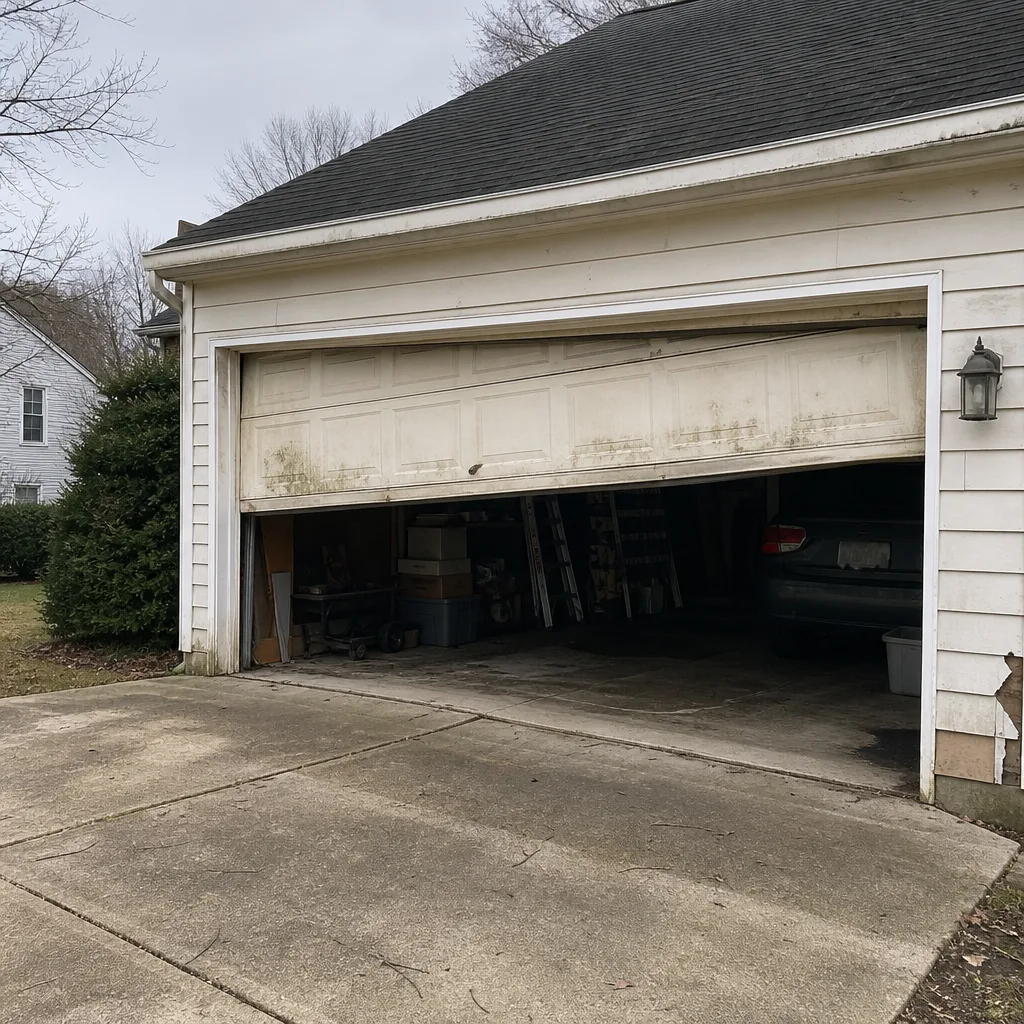
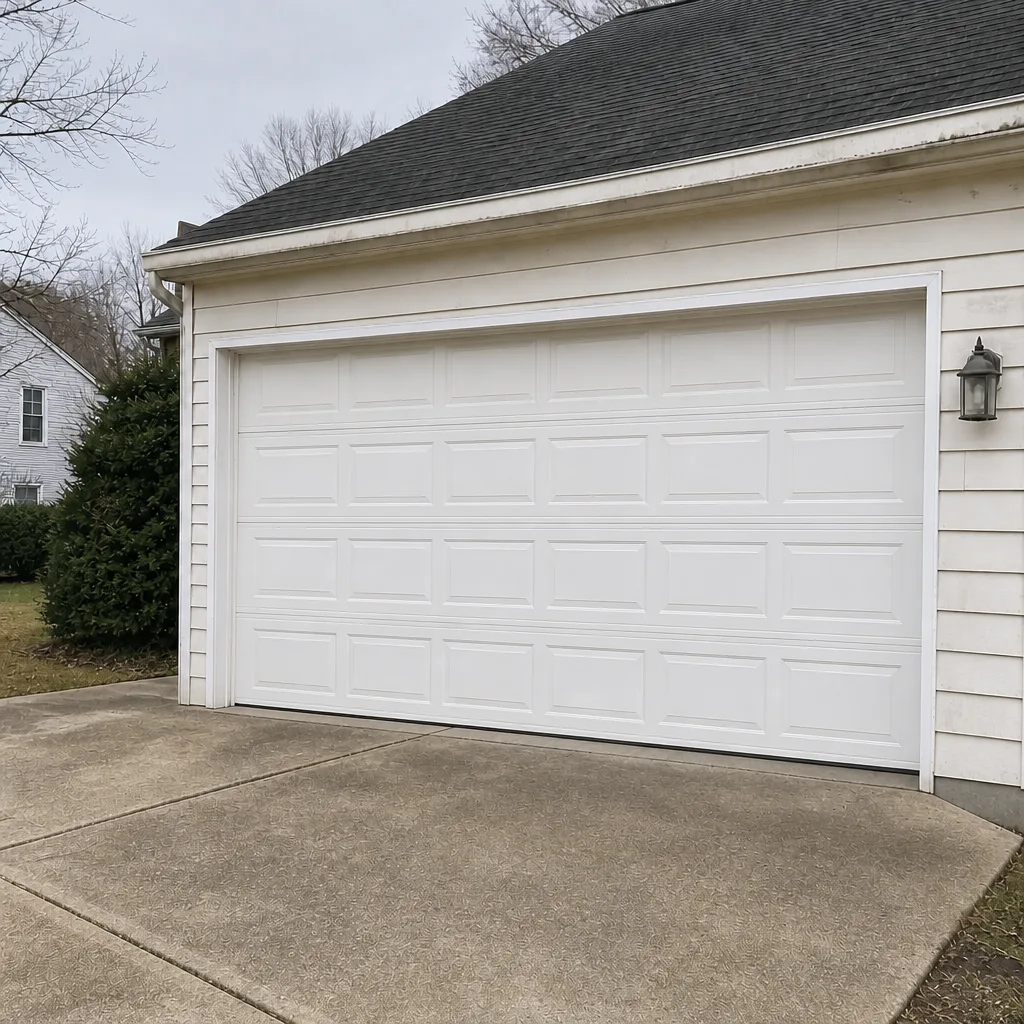
See the difference
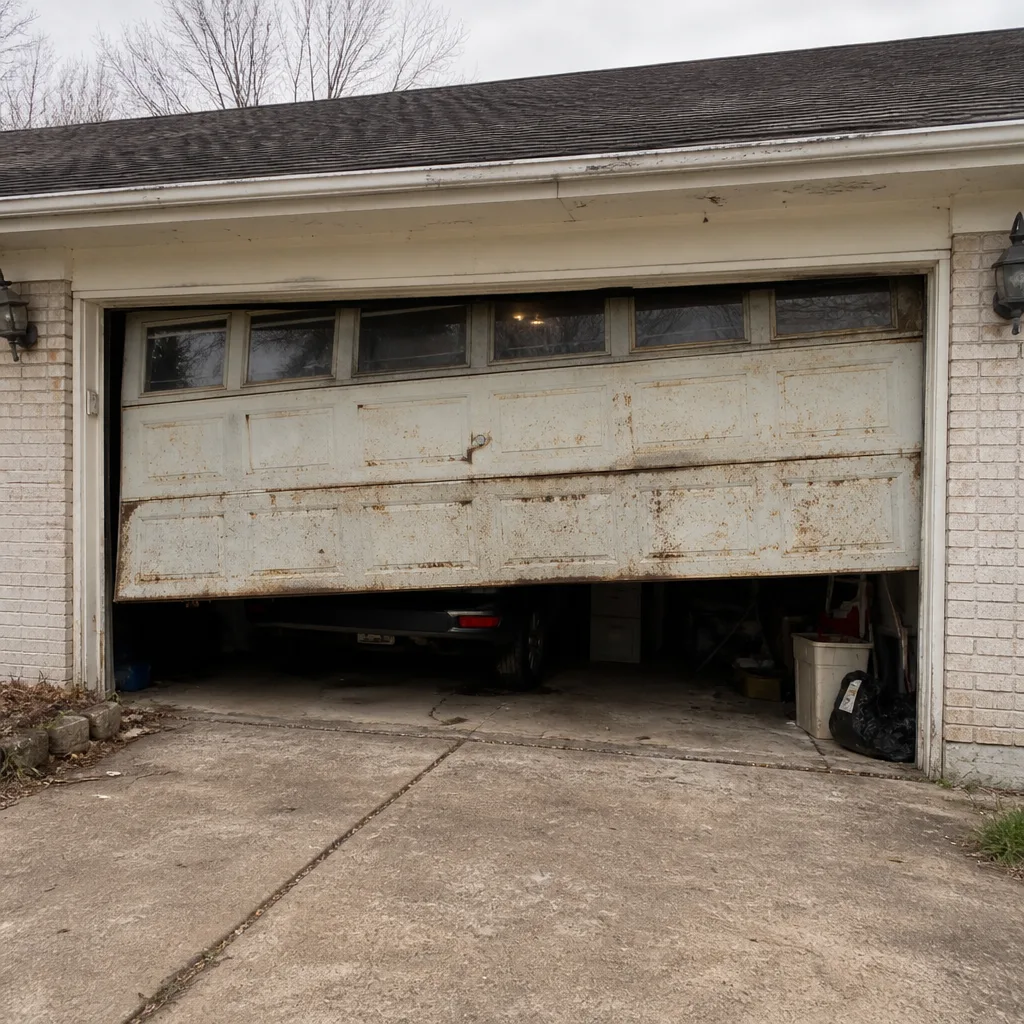 Before
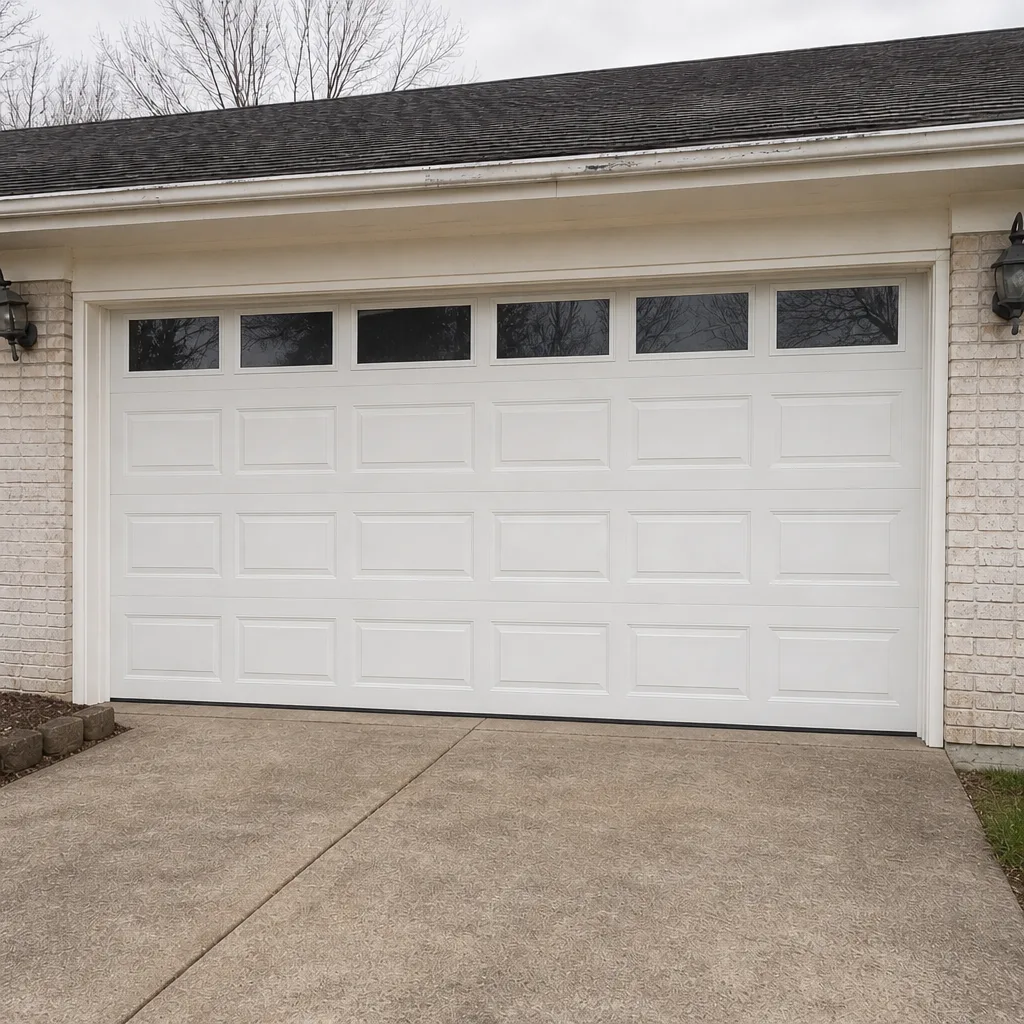 After
 Before
 After
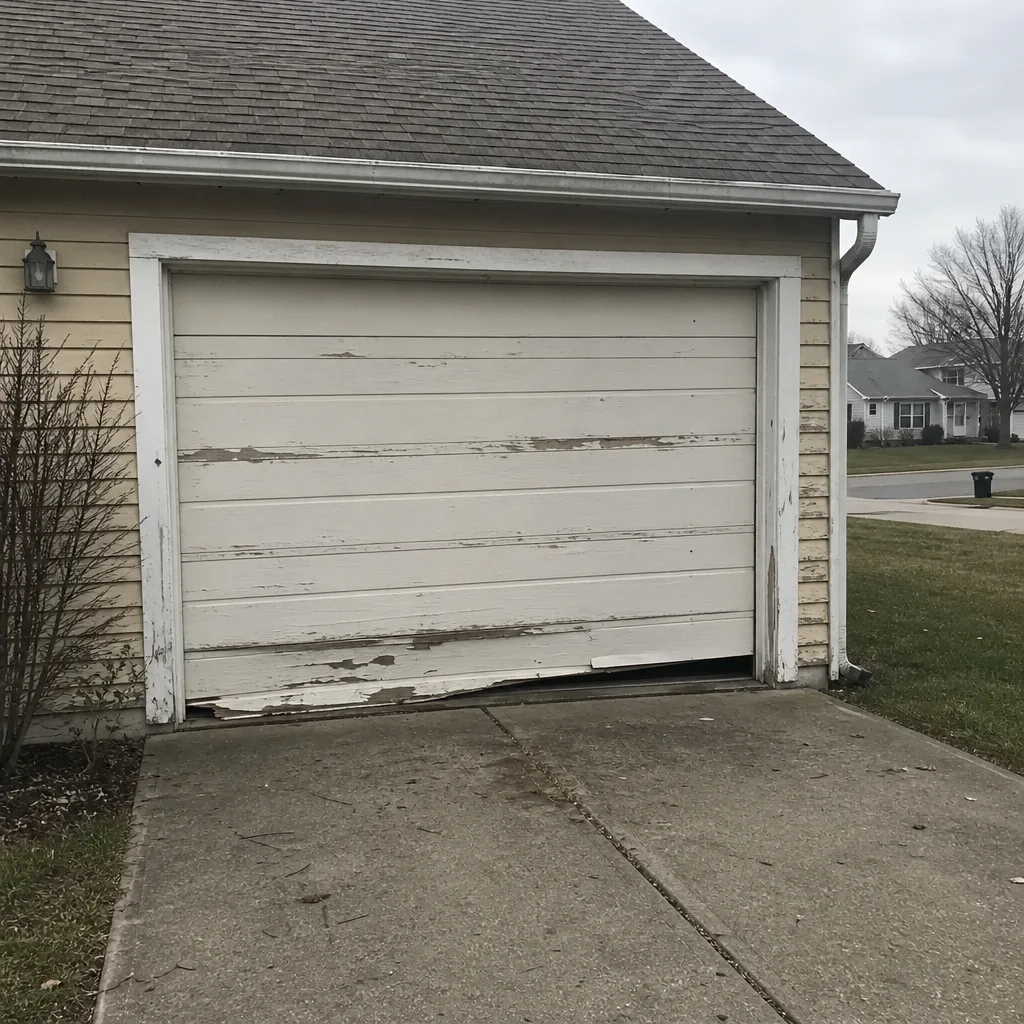 Before
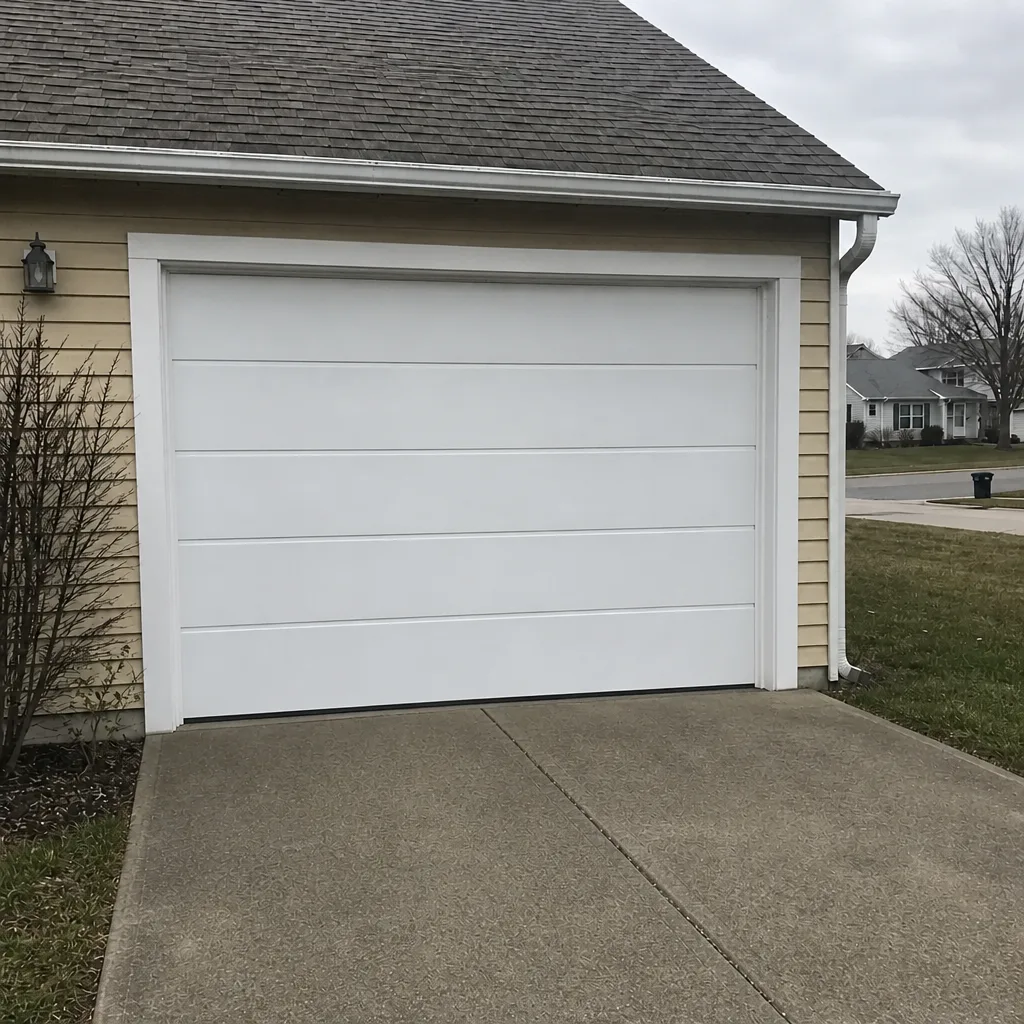 After
When to Call a Professional
Call a professional when the door won’t lift by hand, when a spring is broken or looks compromised, when the door is off its track, or when the opener runs but the door doesn’t move. Also call if the door has been left propped or partially open for more than an hour, or if you’re not sure whether the release cord is connected correctly. Those are the situations where a small problem becomes a large one, and where our single-trade focus actually makes a difference: every technician, every tool, and every part is specific to garage doors.
Carmel Garage Door Service offers free estimates in Carmel – call (855) 535-1056. The price is quoted and agreed before any work starts, and we cover the door, the springs, and the opener in the same visit whenever possible. We answer 24/7. Fast dispatch from 7am to 7pm, Sunday through Friday.
Frequently Asked Questions
Pull the red release cord hanging from the opener carriage straight down and slightly toward the door, then lift the door by the bottom panel. On LiftMaster, Chamberlain, Genie, and Craftsman openers, the release is at the top center, and the sequence is the same. If the door won’t lift by hand after you release it, the spring is likely the problem, so stop and call us at (855) 535-1056 for an exact quote.
No, you shouldn’t. A door with a broken torsion or extension spring is being held only by the opener or by gravity, and forcing it up can cause it to crash down or damage the tracks. Keep the door closed, move people and cars clear, and call us. We handle spring replacement on every major brand, and estimates are free.
Leave the door where it is, get anything you need out of the way, and block the opening from the inside with something heavy and stable if the door is staying up. Don’t wedge a door down with a chair or boxes, and don’t tie it to the track. Then call (855) 535-1056. Our team can diagnose a limit, sensor, or track problem and get the door closing again.
It’s safe only if the door balances on its springs and lifts easily after you release the opener. If the door feels heavy, drops fast, or won’t lift, the springs are compromised and lifting it by hand is dangerous. Springs are the one part of the system homeowners should never work on. Call us instead.
It should include the door manufacturer and model, dimensions, spring type and size, opener brand and model, the location of the release cord, where the wall control and remotes live, and a service number. Add the manual release steps in plain language and the fact that we answer 24/7. Keep it in a plastic sleeve next to the wall button.
A standard residential door in Carmel is not a tornado shelter and shouldn’t be counted on in a tornado warning, regardless of bracing. Bracing can strengthen a door against wind pressure, but it doesn’t turn an off-the-shelf door into a shelter-rated barrier. If you want to know what your door’s wind rating actually is, ask a qualified installer before spending money on bracing.
The Bottom Line
Garage door emergencies in Carmel come down to a handful of situations: a spring that fails, a door that won’t close, a car that can’t get out, or an opener that stops responding after a storm. Every one of those situations is manageable if you know where your release cord is, how to lift the door by hand, and who to call. The rest is preparation: test the release once a season, keep a one-page reference near the door, and have the springs inspected before the first cold snap.
If you’re already in the middle of it, call (855) 535-1056 for a free estimate. We answer 24/7. Fast dispatch from 7am to 7pm, Sunday through Friday. We work on LiftMaster, Chamberlain, Genie, Clopay, Amarr, Wayne Dalton, Craftsman, and Raynor, and garage doors are all we do.
Written by the team at Carmel Garage Door Service.