
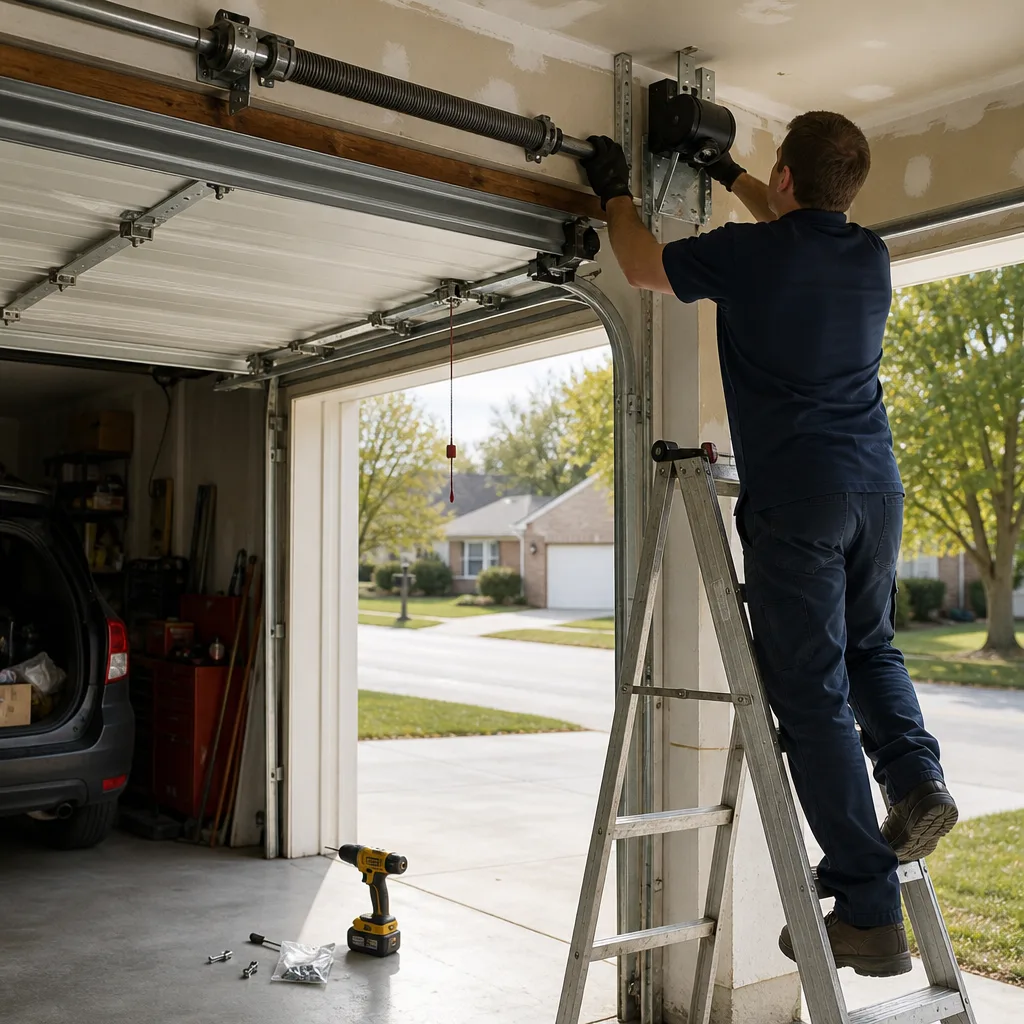
Last updated November 15, 2026
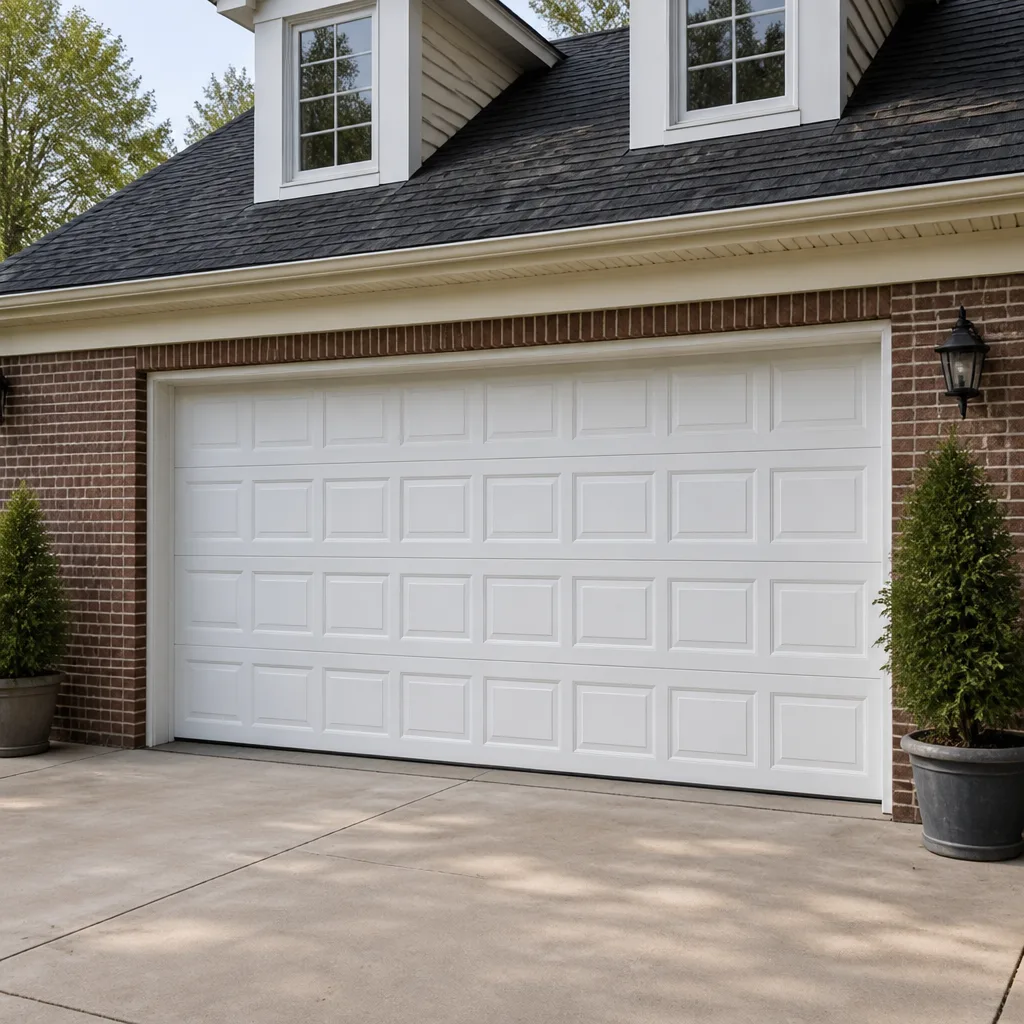 Raised-panel steel
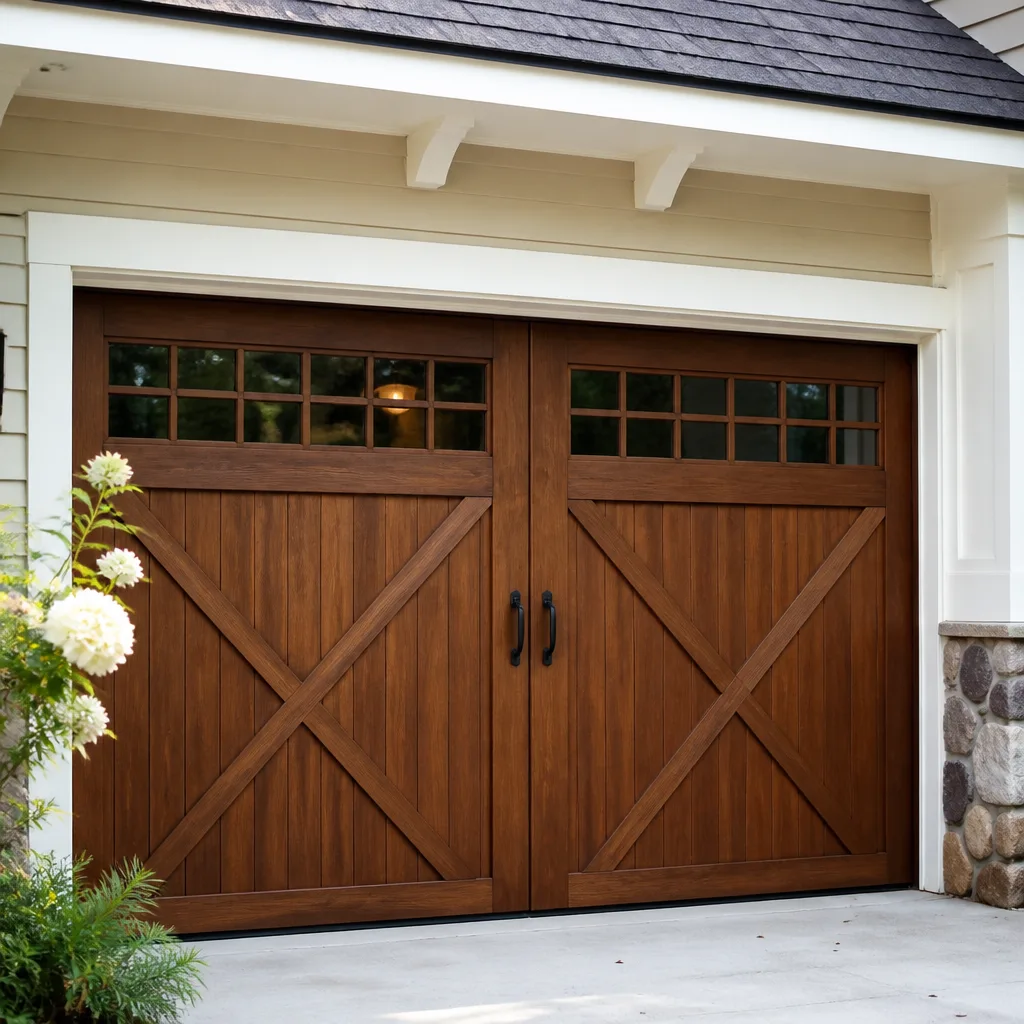 Carriage house
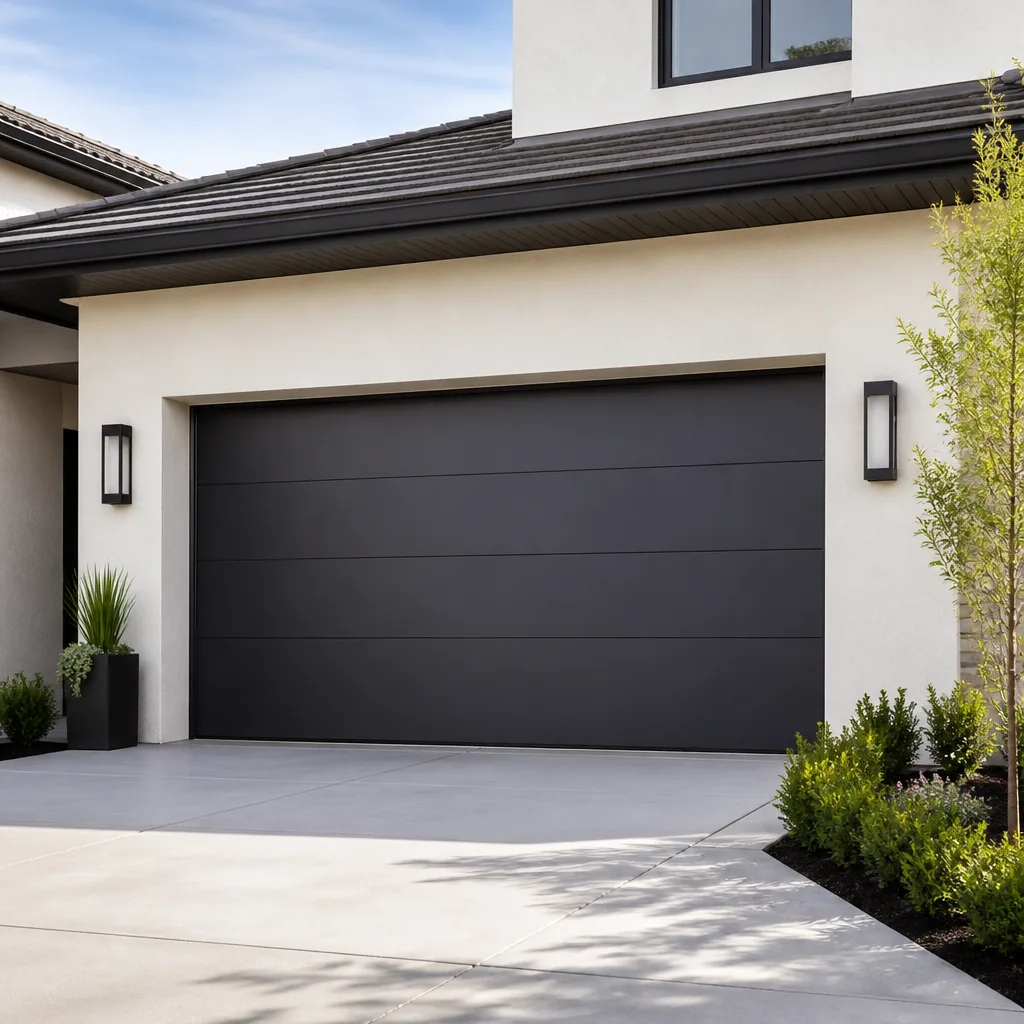 Modern flush
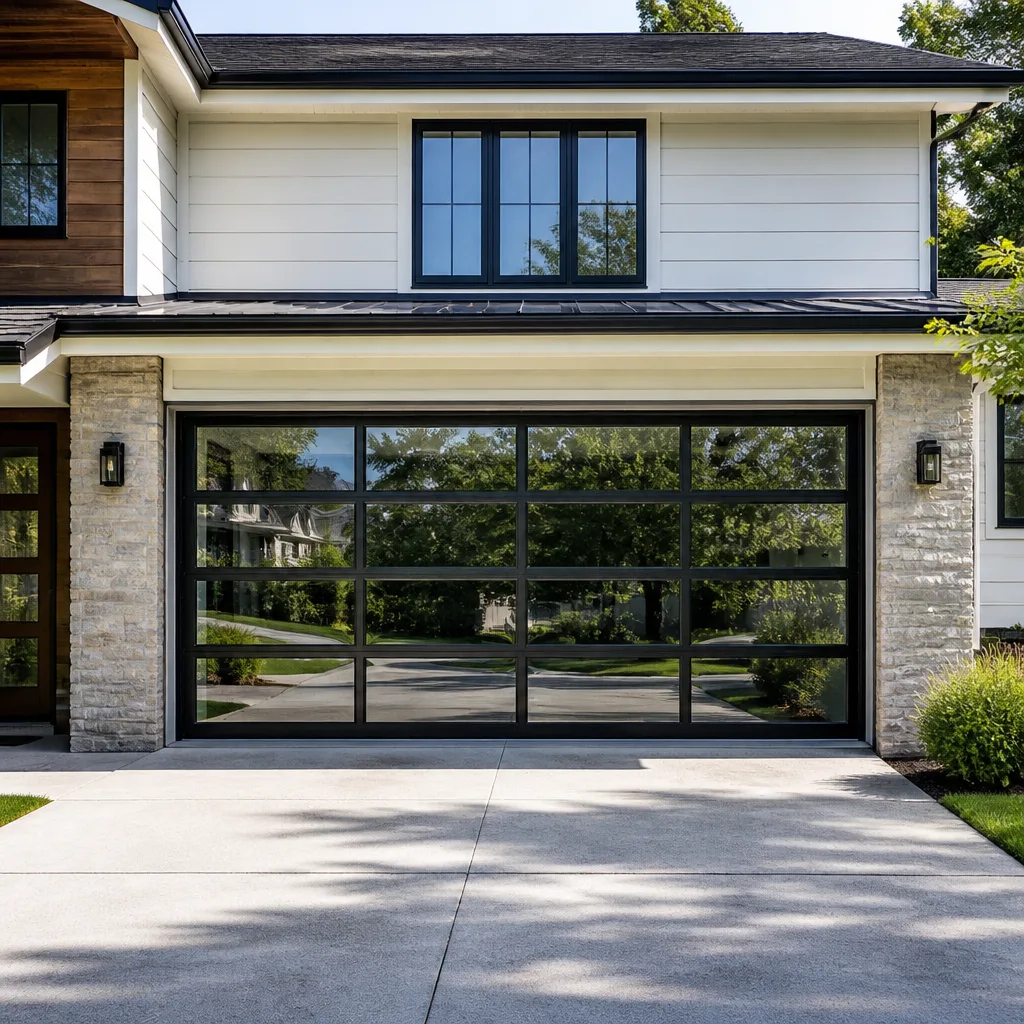 Full-view glass
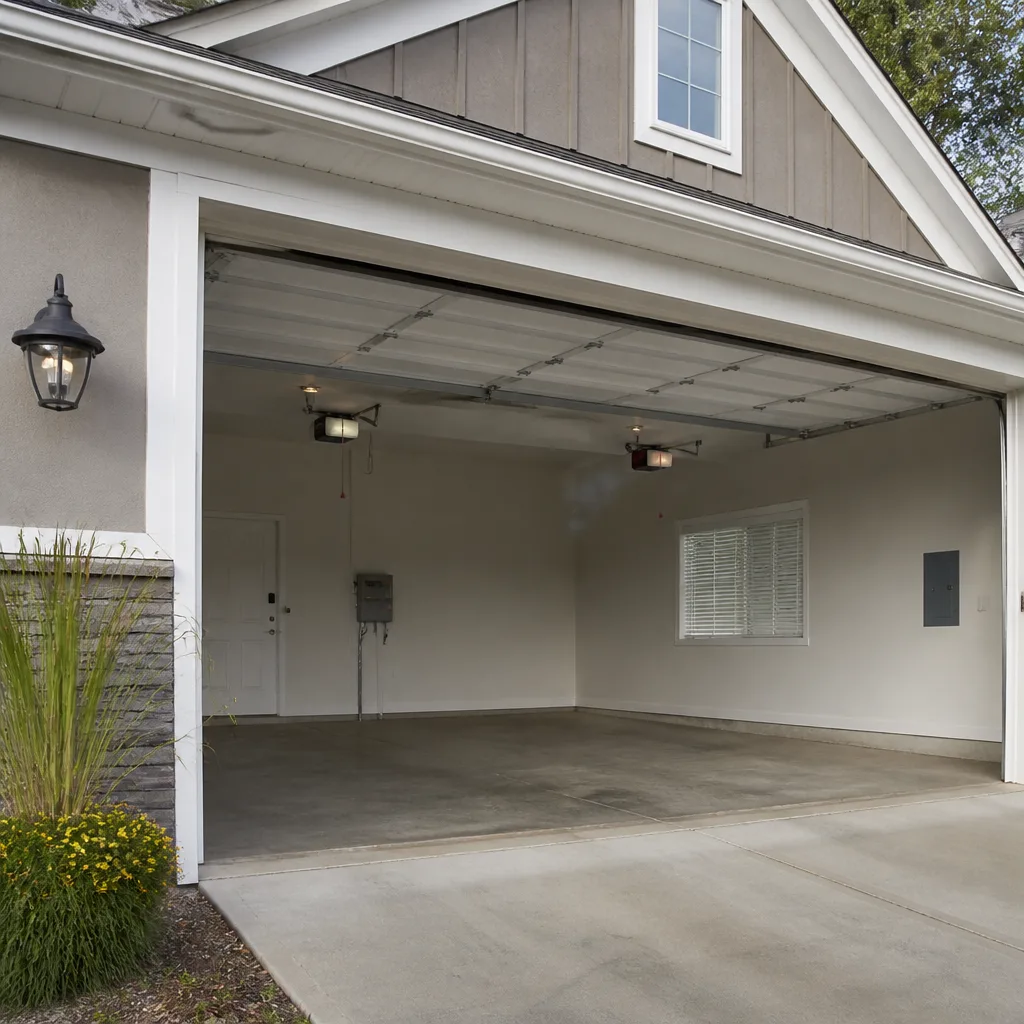 LiftMaster openers
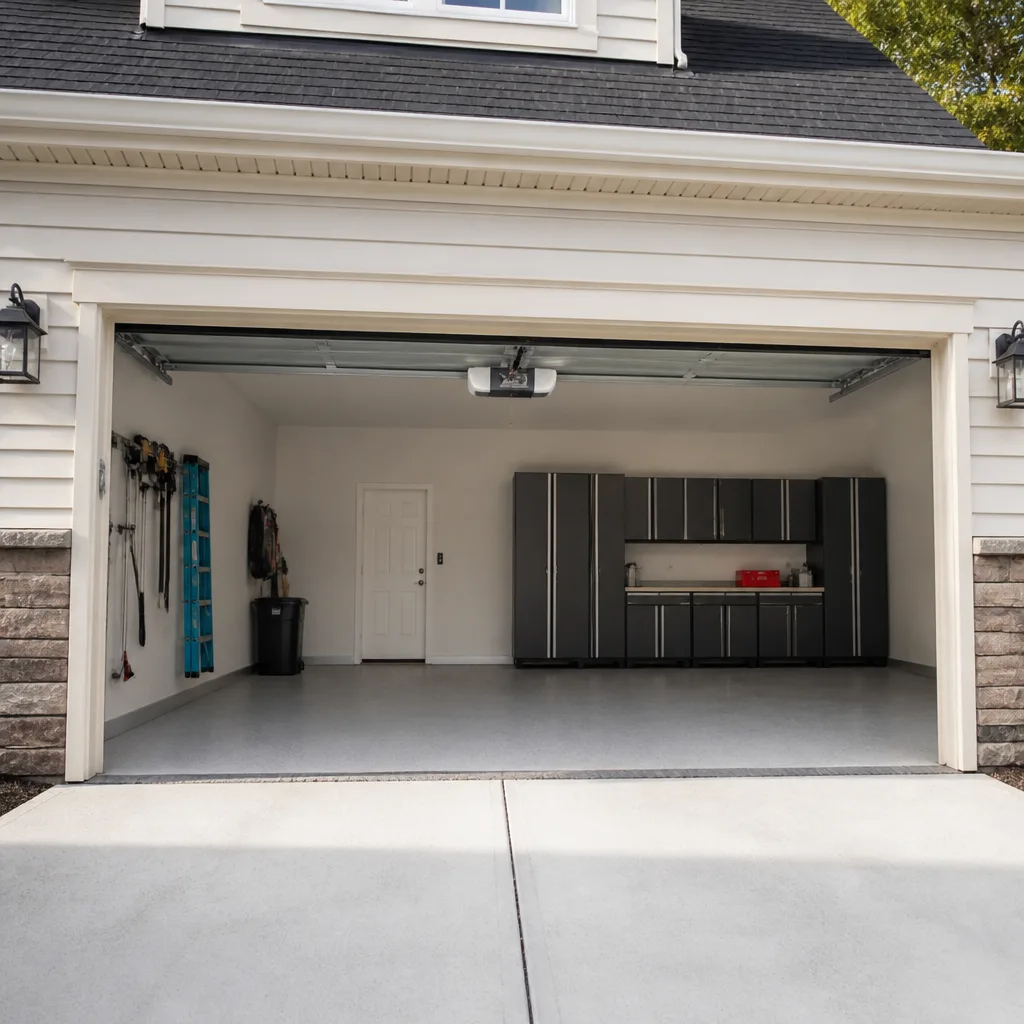 Chamberlain openers
Full 25-point door and opener safety check with every visit - springs, cables, rollers, tracks, and your LiftMaster or Chamberlain opener included
You get a price before we start. It does not change when the pro arrives.
Get your free estimateChoosing the Right Garage Door Brand: A Buyer’s Guide for Carmel
Most homeowners pick a garage door brand the way they pick a paint color: by how it looks in the showroom. That’s backwards. The brand you choose decides what happens in five years when a hinge snaps or an opener board fails, how the door handles an Indiana winter, and whether the technician who shows up can get parts without a factory-order wait. A premium label sold through a national big-box program can actually be harder to service locally than a mainstream brand with steady regional distribution. This guide breaks down how to evaluate a brand on parts availability, warranty reality, insulation and steel specs, and the math that ties brand tier to your home value and how long you plan to stay in Carmel.
Quick Answer
The best garage door brand for a Carmel home is the one whose parts are stocked in the Indianapolis metro, whose warranty is honored without a fight, and whose insulation and steel gauge match your actual climate and budget – not the one with the longest feature list or the biggest showroom. For most homeowners here, that means a mainstream brand such as Clopay, Amarr, or Wayne Dalton that local specialists can service the same week something breaks, matched to your home’s value and how long you plan to stay. We work on whatever brand is already on your door, so the goal is a door you can keep servicing, not one you’ll be stuck with.
Styles & brands we work with
- Raised-panel steel
- Carriage house
- Modern flush
- Full-view glass
- LiftMaster openers
- Chamberlain openers
Table of Contents
- Why Parts Availability Matters More Than the Showroom
- The Brands Most Common in Carmel’s HOA Communities
- Steel Gauge and Insulation: Where Specs and Marketing Diverge
- What a “Lifetime Warranty” Really Covers
- Matching Brand Tier to Home Value and Tenure
- How Indiana Winters Change the Brand Decision
- The Brands We Work On and Why It Matters
- How to Evaluate a Brand in Five Steps
Why Parts Availability Matters More Than the Showroom
A garage door is a mechanical system with moving parts, and every moving part eventually wears out. The brand question, for a homeowner, is really a parts question. If a torsion spring, a hinge, a roller, or an opener logic board fails, can your local technician get the replacement without waiting weeks for a factory order? In the Indianapolis metro, mainstream brands with regional warehouse distribution keep common parts within a day or two. Some premium labels sold exclusively through big-box programs use proprietary hardware that isn’t stocked locally at all.
That’s the part buyers rarely weigh. A door that looks like a better value on the showroom floor can turn into a frustration the first time something simple breaks, because the part exists only in a manufacturer’s catalog and ships from out of state. We’ve seen this play out with premium-brand doors far more than with mainstream ones, and never in a way you can predict from the feature list. The label doesn’t tell you whether the parts are local. The distribution network does.
Here’s what to actually check before you buy:
- Ask the installer where common parts ship from. If the answer is “the manufacturer’s regional warehouse,” you’re in good shape. If it’s “the factory, special order,” ask how long that typically takes.
- Look for a brand with broad regional distribution. Brands like Clopay, Amarr, and Wayne Dalton have wide dealer and parts networks across the Midwest, which is part of why they show up on so many doors in Carmel.
- For opener brands, check board and motor availability. LiftMaster, Chamberlain, and Genie parts sit on most local shelves. A more obscure opener brand can leave you waiting on a board when the logic fails.
- Confirm your installer actually stocks the wear parts. Springs, rollers, cables, and hinges are the parts that fail first. A technician who can match them to your door’s brand without a special order means same-week repairs.
The practical takeaway: any brand can be a good brand if parts are reachable. Any brand can be a bad experience if they aren’t. That’s true for a door replacement project, whether it involves making sure you can get garage door repair quickly, or evaluating a door you’re keeping long-term rather than replacing in three years.
The Brands Most Common in Carmel’s HOA Communities
If you live in an HOA-governed neighborhood in Carmel, you’ve probably already noticed that brand choice is partly made for you. Many of the newer subdivisions here have architectural review requirements, and those requirements tend to point homeowners toward a narrow set of approved styles and brands. Three factors drive those defaults.
Warranty consistency. HOA architectural review committees tend to favor brands with clear written warranties, because a warranty tied to a builder or installer relationship is easier to verify than a marketing promise. Brands like Clopay and Amarr show up often because their warranty terms are documented and honored through established local dealer networks.
Appearance consistency. Style is where these requirements bite hardest. Carmel HOA communities tend to favor matching carriage-house styles, consistent panel patterns, and specific color palettes across neighboring homes. Approved brand lists exist partly to keep that visual uniformity intact, so the door that fits your neighbor’s elevation also fits yours under the review rules.
Installer relationships. HOAs and builders often work from a preferred-installer list. That means the brands most commonly specified in Carmel’s newer neighborhoods tend to be the ones a builder’s own installer already stocked and serviced. It’s a practical default rather than a ruling on which brand is best. If your home was built within the last couple of decades, the door on it now is probably a mainstream brand from that list.
Before you order, check your HOA’s architectural guidelines and confirm what your review committee requires. Doing that first prevents the scenario where you pick a beautiful door, install it, and get a request to change it. We’ve seen that happen to homeowners who skipped the review process, and it’s entirely avoidable. If you’re in an HOA community in Carmel, start there.
Steel Gauge and Insulation: Where Specs and Marketing Diverge
At the same nominal price point, garage door brands are not actually built the same way. Two doors that look identical on the showroom floor and sit within a few hundred dollars of each other can differ meaningfully in steel gauge, insulation core, and section construction. Marketing language hides the differences. Specs don’t. Here’s what to compare.
Steel gauge. Gauge numbers run the opposite way from what most people expect: a lower gauge number means thicker steel. Manufacturer marketing often uses words like “heavy-duty,” “premium steel,” or “reinforced” without ever stating the gauge. Ask your installer what gauge the panels use. Thicker steel resists dents and holds its shape longer, which matters most on a north- or west-facing door that takes more sun and wind. Two doors marketed as equivalent can differ by a full gauge, and that’s the difference that shows up in ten years.
Insulation core. Doors sold as “insulated” range from a thin layer of polystyrene behind a steel skin to a fully filled sandwich with polyurethane. The material and how much of the door is filled matter more than the number on the box. Polystyrene is the lighter, lower-cost option and is adequate for a detached garage or a door you don’t heat. Polyurethane, injected to fill the panel fully, offers more thermal resistance and quieter operation. At a matched price point, brands often skimp on the core to preserve the sticker. Look at the core, not the section thickness.
Section construction and hardware. Hinges, tracks, rollers, struts, and springs vary by brand at the same price. Stainless or galvanized hinges and standard-gauge tracks age better in the Midwest than lighter components. Ask what the door ships with on hardware, not just panels.
We’ve seen buyers pay a premium-brand price and get a mid-tier insulation core because the marketing language never stated which. Insist on the actual gauge and the actual core material when you compare quotes. If the quote just says “insulated,” ask why.
What a “Lifetime Warranty” Really Covers
“Lifetime warranty” on a garage door sounds absolute. It isn’t. Across manufacturers, the term rarely covers everything for the life of the door, and the claims process is often where the fine print lands. Reading the exclusions up front is the difference between a warranty that gets honored and one that gets argued about.
Here’s what typically differs across brands:
- What “lifetime” actually refers to. Many doors carry a lifetime warranty on steel sections against rust and delamination, and a shorter, stated term on springs, labor, and finish. The steel might be lifetime and the spring five years. Read both.
- Labor coverage. Labor is often excluded from the warranty or covered shorter than parts. That means a warranty-eligible part can still cost you a labor charge when it’s swapped. Ask who pays labor and for how long.
- Springs. The torsion spring is the part most likely to fail first, and spring warranty terms vary widely across brands. Some carry a multi-year spring warranty; others cover springs only for a short window.
- Claims process. Some brands route claims through the local dealer, which is fast and straightforward when the dealer is still around. Others require the homeowner to submit directly to the manufacturer with documentation and photos. Ask which path your brand uses.
- Transferability. Multiple manufacturers let the warranty transfer to a new owner once, for a limited period. If you’re selling soon, that’s a genuine selling point. Confirm it in writing.
We’ve had homeowners bring us a “lifetime” claim on a manufacturer that required a dealer-of-record to process it, and the original installer no longer existed. The fix was easy; the paperwork was not. Keep your original warranty documents, and ask your installer what documentation you’ll need if you ever file a claim. If your door or opener is already failing and the warranty route looks slower than the repair, garage door opener repair and standard repair work can usually happen in a single visit.
Matching Brand Tier to Home Value and Tenure
Brand tier should follow two things: what your home is worth, and how long you plan to stay. A homeowner planning to sell in three years is optimizing for resale curb appeal and a clean warranty handoff. A homeowner staying fifteen years is optimizing for service life, insulation, and the availability of replacement parts. Same street, different answer.
Planning to sell in about three years. Focus on appearance and transferability. Choose a mainstream brand with documented transferable warranty terms, a style that fits the street, and hardware that won’t need replacing during your ownership window. Don’t overspend on a premium tier that won’t be visible in the listing photos. You want a door that photographs well, operates cleanly during showings, and comes with paperwork the next owner can use.
Planning to stay around fifteen years. Focus on service life and parts. Buy the better insulation core and the heavier steel gauge, choose a brand with regional distribution so springs, rollers, and hinges stay available, and pick an opener that local specialists can still service years from now. A premium brand with proprietary parts is a worse bet for a long stay, because you’ll be the one dealing with a factory order when something fails in year twelve.
The value-matching rule. A garage door should look proportionate to the home. Over-spending on a top-tier brand for a modest home won’t return at resale, and under-spending on an entry tier for a higher-value home looks wrong from the curb and pulls down curb appeal. Match the tier to the house.
The tenure-matching rule. Buy for the time you’ll own the door. If you’re leaving soon, buy appearance and paperwork. If you’re staying, buy serviceability. Most of the buyers we talk to in Carmel fall somewhere between, which is why it’s worth asking the question directly.
How Indiana Winters Change the Brand Decision
Carmel winters are the kind that test a garage door’s construction, not just its color. Freeze-thaw cycles, cold mornings, and a heated home on one side of the door and a cold garage on the other create the conditions where cheap construction shows. In practice, that makes three brand decisions more important here than in milder climates.
- Insulation matters for more than energy bills. A well-insulated door with a full polyurethane core reduces heat loss into the garage and cuts the condensation that builds when warm interior air meets a cold steel surface. That condensation is where rust starts. It’s a performance decision, not a comfort one.
- Steel gauge tolerates the cycles better. A heavier-gauge panel resists the flexing and denting that lighter steel shows after several winters. If your door faces north or west and takes wind and shade, the gauge difference is worth the extra cost.
- Opener duty cycling matters. A door that runs in the cold needs an opener rated for it. A brand with a well-supported opener line, and parts on a local shelf, makes winter opener failures a same-week repair instead of a long wait.
The hardware that holds the door together also ages faster in this climate. Galvanized or stainless hinges and rollers tolerate freeze-thaw moisture better than lighter components. When you compare brands, compare their hardware, not just their panels. It’s the hardware that fails in the cold.
The Brands We Work On and Why It Matters
We’re factory-familiar with eight of the most widely installed garage door and opener brands: LiftMaster, Chamberlain, Genie, Clopay, Amarr, Wayne Dalton, Craftsman, and Raynor. That’s not a marketing list. It’s the practical foundation for a brand-agnostic service model: we work on whatever brand is already on your door, rather than steering you toward a single preferred line. Garage doors are all we do, and every technician and every tool is specific to garage doors, not split across plumbing, HVAC, or general contracting.
That matters when a brand question comes up during a repair. A technician who already knows the difference between a LiftMaster logic board and a Genie screw-drive assembly reaches the fix faster. Our technicians have up to 8 years of experience, and because we handle both the door system and the opener system in a single visit, brand familiarity means a same-visit diagnosis and repair across both systems at once. If your brand isn’t on that list, it’s still worth a call; we’ll tell you honestly whether we can service it.
The brand-agnostic stance also matters for buyers. When a specialist doesn’t sell a single preferred line, the recommendation follows what your door needs, not what a dealer incentive points toward. The right fix, not the easiest upsell. If that’s what you’re after in Carmel Garage Door Service, the same specialist handles repair, opener repair, and installation.
How to Evaluate a Brand in Five Steps
Here’s the process we’d walk any buyer through, whether you’re replacing a door on a Carmel home or choosing a brand for a new build. It applies to door and opener brands alike.
- Check your HOA guidelines first. Confirm approved styles, color palettes, and any brand restrictions before you compare anything else. If you’re in an HOA-governed community in Carmel, this step can narrow the field to a handful of options instantly.
- Verify parts availability locally. Ask where the brand’s springs, hinges, rollers, and opener boards ship from. Prefer brands with regional distribution in the Indianapolis metro over brands that only ship from the factory.
- Compare real specs, not labels. Ask for the steel gauge, the insulation core material, and the hardware composition on each quote. Ignore “premium” and “heavy-duty” language unless the spec sheet backs it up.
- Read the warranty, especially the exclusions. Find out what’s covered on steel, springs, and labor, how long each is covered, how the claims process works, and whether it transfers. Get the specifics in writing.
- Match the tier to your home and tenure. Buy for resale appearance and transferability if you’re leaving soon; buy for service life and insulation if you’re staying. The right answer differs by household, and it should.
Two things to remember throughout. First, the price you agree should be quoted and written down before any work starts, and it should specify the brand, model, gauge, and core, not just a line item called “garage door.” Second, any quote should be an estimate, with the written estimate setting the final price. If a quote is vague about brand and spec, that’s the sign to ask more questions.
Common Mistakes to Avoid
- Choosing on appearance alone. A door that looks right on the showroom floor can be the wrong brand for your parts network and your climate. Appearance is one factor; distribution, insulation, and warranty are the others.
- Assuming premium labels are always easier to service. Proprietary hardware on some premium doors isn’t stocked locally, so a single broken part can mean a factory-order wait. Ask where the parts ship from before you commit.
- Accepting “insulated” without the core material. Polystyrene and polyurethane are not equivalent. At the same price, brands can cut the core to protect the sticker. Ask which material and how much of the door is filled.
- Reading “lifetime” as everything. Lifetime steel, shorter labor, and short springs can coexist in one warranty document. Read the exclusions and the labor clause before you sign.
- Ignoring your HOA review. Installing a door that fails architectural review in a Carmel HOA community means redoing the job. Confirm the approved styles and brands first.
- Buying for today’s budget only. A cheap tier can cost more over fifteen years through poorer insulation and harder-to-source parts. Match the tier to how long you’ll own the door.
- Skipping the opener in the decision. The door and opener work as one system. A well-chosen door on a poorly supported opener brand still leaves you waiting on parts. Evaluate both together.
See the difference
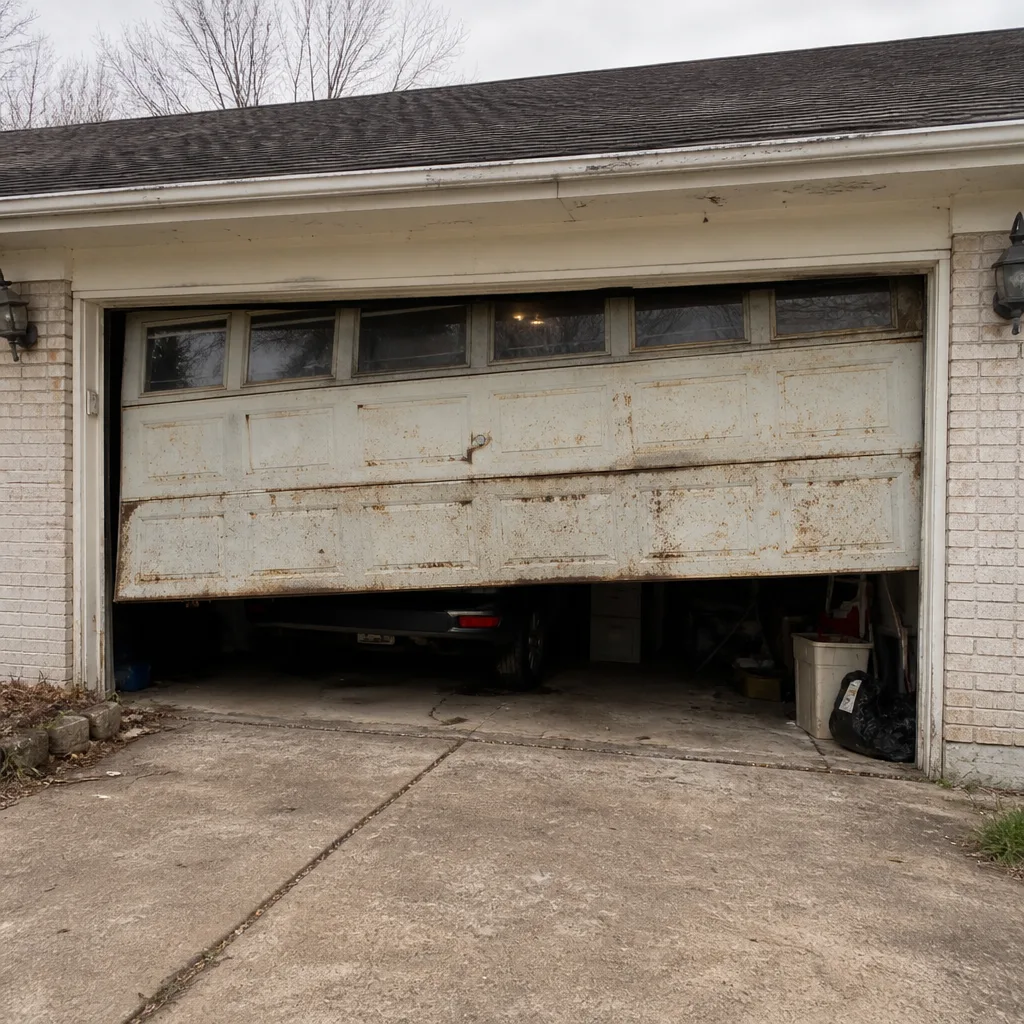 Before
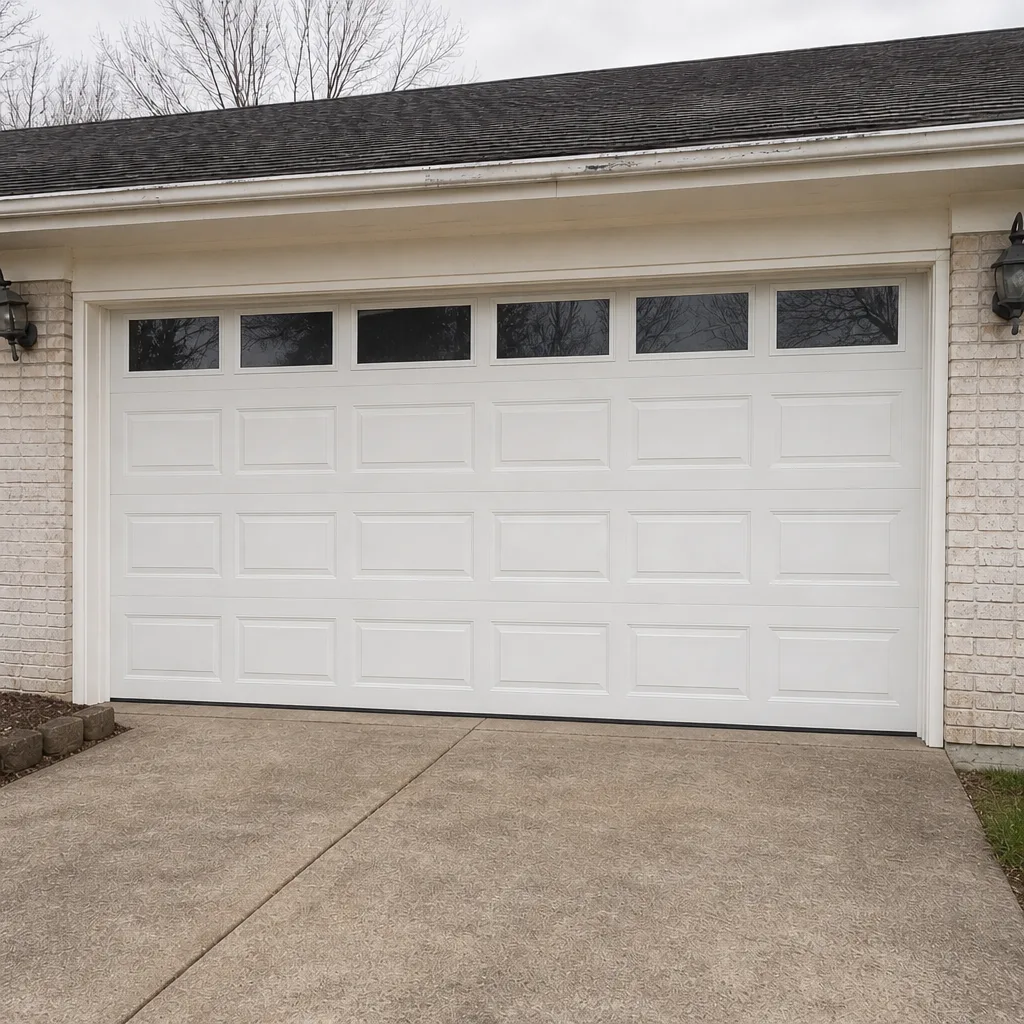 After
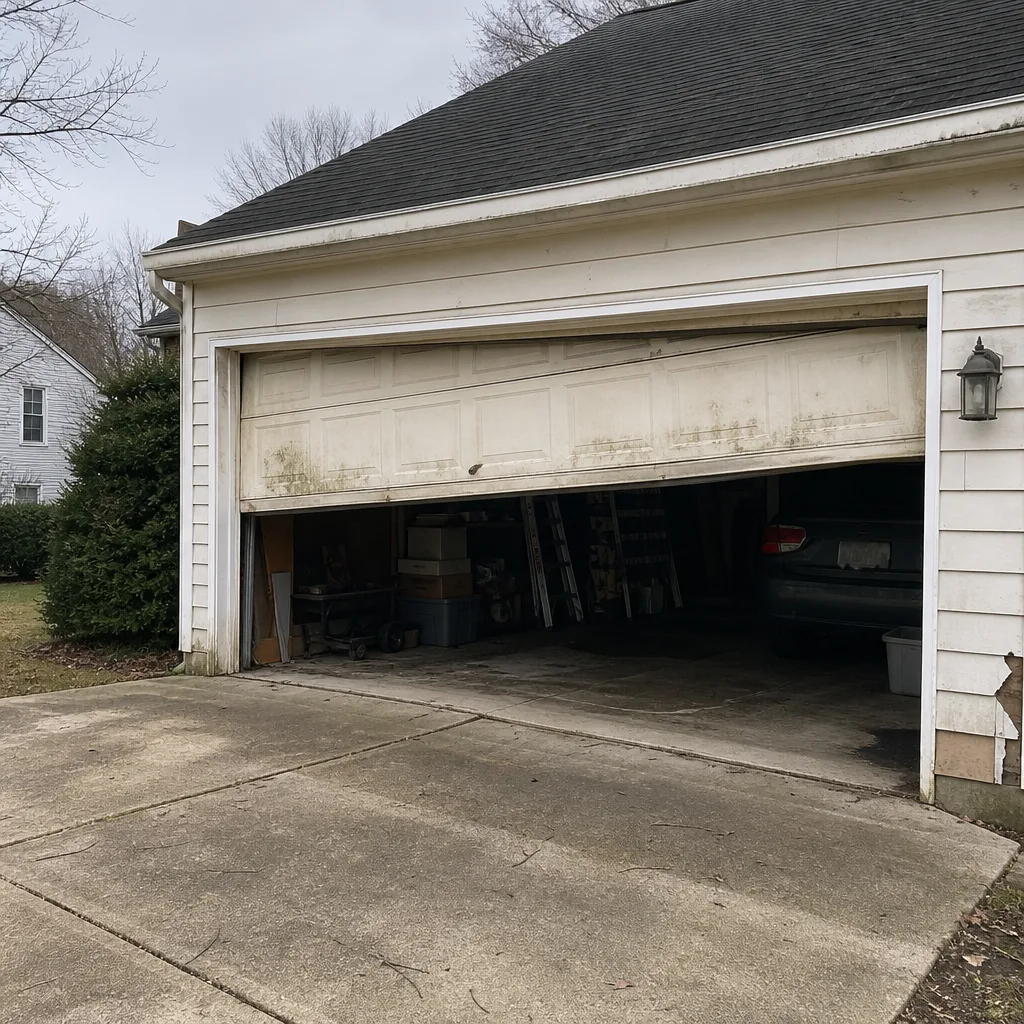 Before
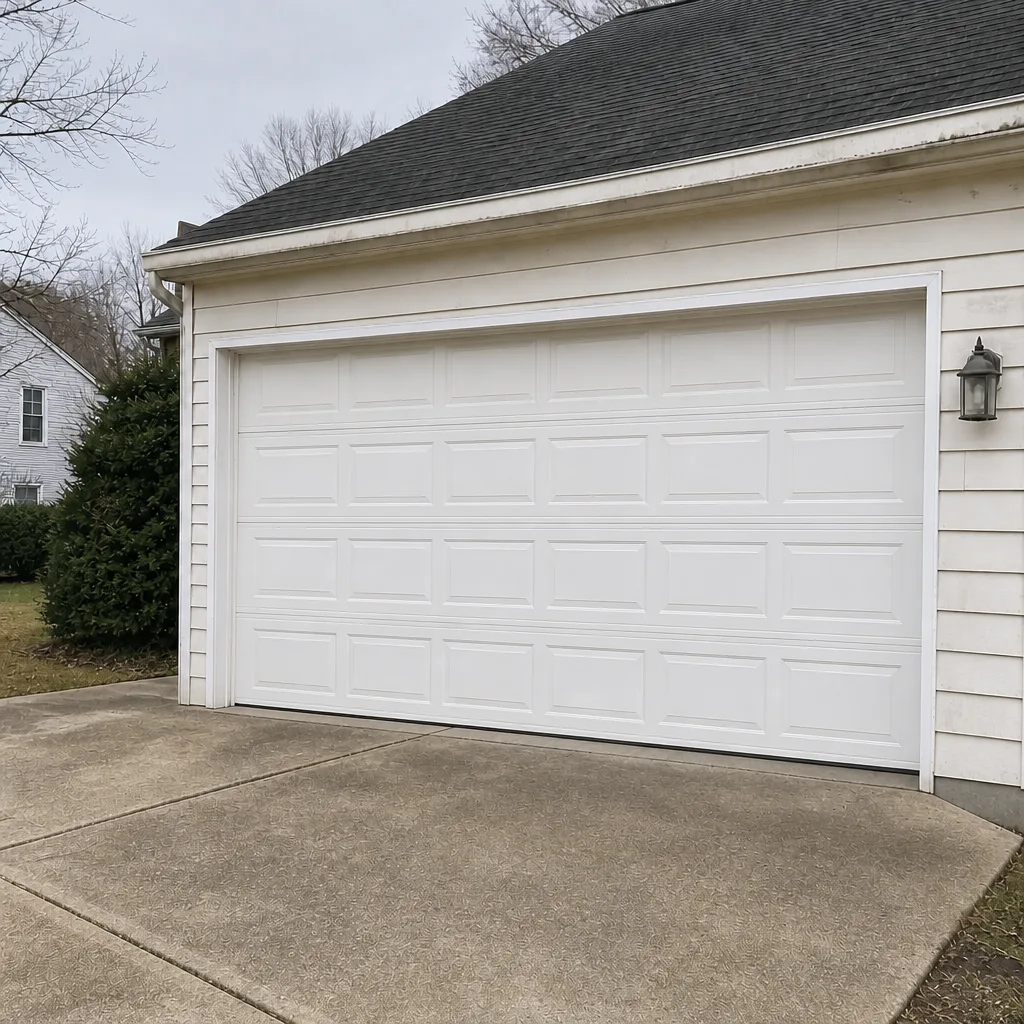 After
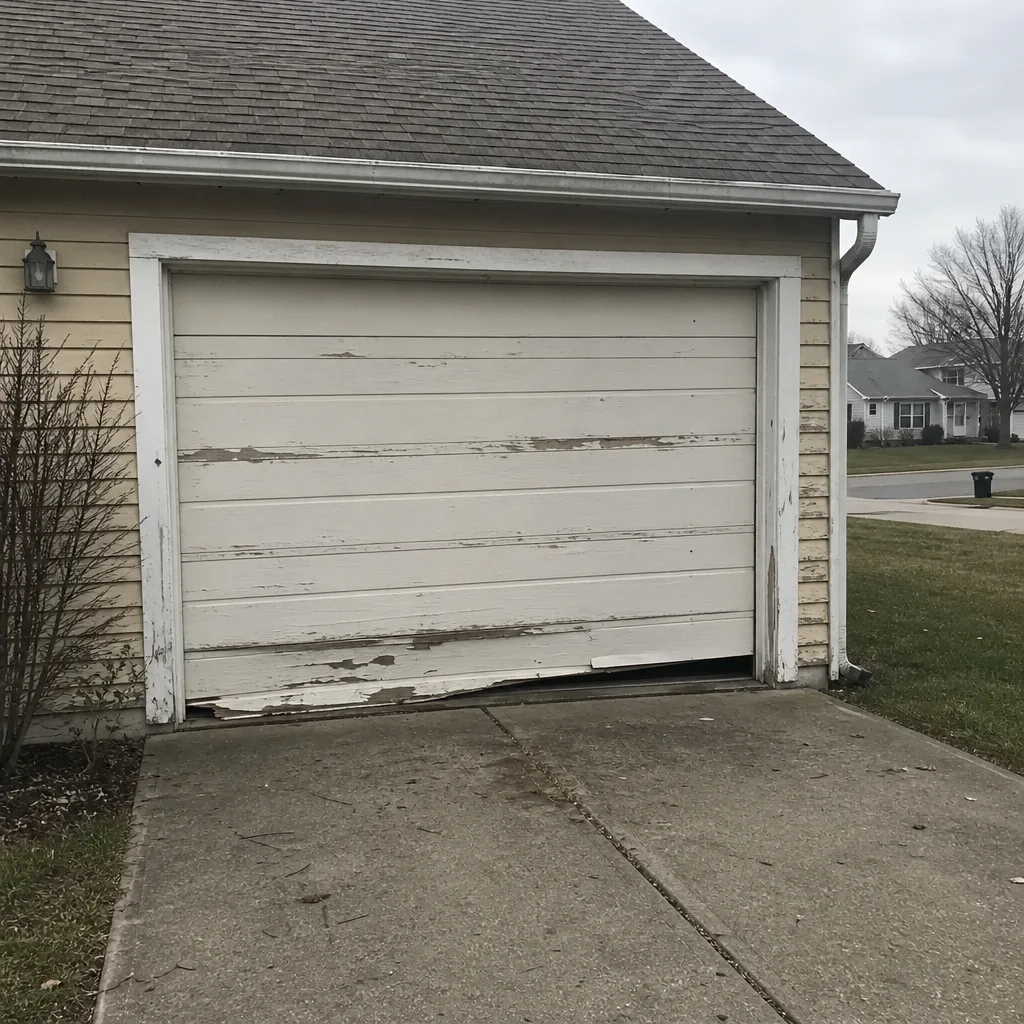 Before
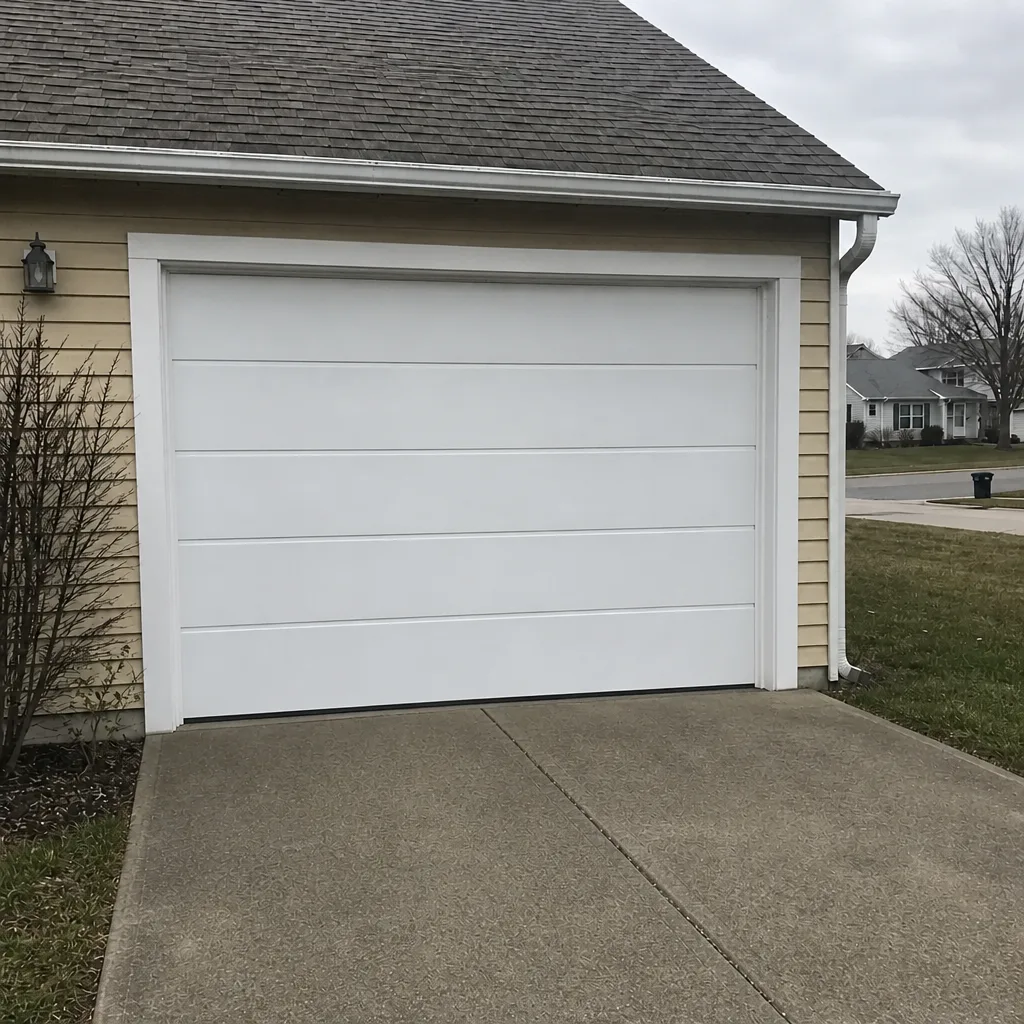 After
When to Call a Professional
Some brand decisions are research you can do yourself, and some need a trained eye. Call a professional when your current door is failing and you need to know whether to repair or replace before choosing a brand; when your HOA requires verification of approved styles or hardware; when your existing warranty claim needs documentation and you’re unsure of the process; or when you’re weighing a brand tier and need someone who’s seen how those doors actually age in Indiana. High-tension torsion springs and cables are dangerous to touch, so a failing spring is never a DIY job; leave the spring, cable, and opener-board work to a trained technician. Carmel Garage Door Service offers free estimates in Carmel: we work on whatever brand you already have, and we can help you pick the next one on the same visit. Call (855) 535-1056. We answer 24/7. Fast dispatch from 7am to 7pm, Sunday through Friday. A call outside dispatch hours is booked into the next opening, Sunday through Friday, 7am to 7pm.
Frequently Asked Questions
The best brand is the one whose parts are locally available, whose warranty is honored without friction, and whose insulation and steel gauge fit your home’s value and your plans. For most Carmel homes, that means a mainstream brand such as Clopay, Amarr, or Wayne Dalton with solid regional distribution. Premium brands with proprietary parts can be harder to service, so parts availability outranks brand name. Call (855) 535-1056 for an exact quote on your door – estimates are free.
Brand tier affects the price, but so do insulation core, steel gauge, hardware, and size. Two doors at the same nominal price can differ in gauge and core a full grade apart. The written estimate sets the final price, and it should name the brand, model, gauge, and core so the comparison is honest. Call (855) 535-1056 for an exact estimate – it’s free.
In most cases, yes. We work on whatever brand is already on your door, across LiftMaster, Chamberlain, Genie, Clopay, Amarr, Wayne Dalton, Craftsman, and Raynor, rather than pushing a single preferred line. If your brand isn’t among those, it’s still worth asking; we’ll tell you honestly whether we can service it. Call (855) 535-1056 to confirm your brand – estimates are free.
Not always. Lifetime warranties often cover steel sections against rust and delamination for life, while labor and springs carry shorter, stated terms. Read the exclusions and the labor clause, and ask how the claims process works and whether it transfers. Call (855) 535-1056 if you’re unsure what your warranty covers – we can walk through it.
Start with your HOA’s architectural guidelines and confirm the approved styles, color palettes, and any brand restrictions. Many Carmel HOA communities work from a preferred list because of warranty, appearance consistency, and installer relationships. Confirm before you order. Call (855) 535-1056 and we can help you interpret the review requirements – estimates are free.
Yes, usually. If you’re selling soon, favor a mainstream brand with documented transferable warranty terms and a style that fits the street, and don’t overspend on a premium tier that won’t show in listing photos. If you’re staying fifteen years, favor insulation, steel gauge, and locally available parts instead. Call (855) 535-1056 to talk through which tier fits your timeline – the estimate is free.
The Bottom Line
The right garage door brand for a Carmel home isn’t the one with the longest feature list or the biggest showroom. It’s the one whose parts are stocked in the Indianapolis metro, whose warranty is honored without a fight, and whose insulation and steel gauge match your climate and your plans. Check your HOA guidelines first, compare real specs rather than marketing labels, read the warranty exclusions, and match the tier to your home’s value and your expected tenure. A brand that can be serviced in five years is worth more than one that can’t. We work on the brands already on Carmel doors, and we’ll help you pick the next one honestly.
Whether it’s the door, the springs, or the opener itself, we can diagnose and quote on the same visit. Call (855) 535-1056 for a free estimate. We answer 24/7. Fast dispatch from 7am to 7pm, Sunday through Friday.
Written by the team at Carmel Garage Door Service.